Philly Knob & Tube offers knob-and-tube inspection and circuit mapping in Philadelphia, carried out by licensed electrical contractors, for owners who need to know what the old wiring in a house is actually doing before anyone prices a replacement. It is a K&T-specific electrical assessment, not a general home inspection: the question it answers is which old circuits are still carrying current, what they feed, and how they connect to everything installed since.
That question usually arrives from somewhere else. A buyer’s inspection report says “knob-and-tube observed, recommend evaluation by a licensed electrician.” An insurer’s underwriting letter asks whether the house has active K&T. A renovation opens a ceiling and finds porcelain. Each of those sources has seen part of the system. None of them has followed a circuit from the panel to the last fixture, and that is the gap this assessment fills.
What Happens on the First Visit
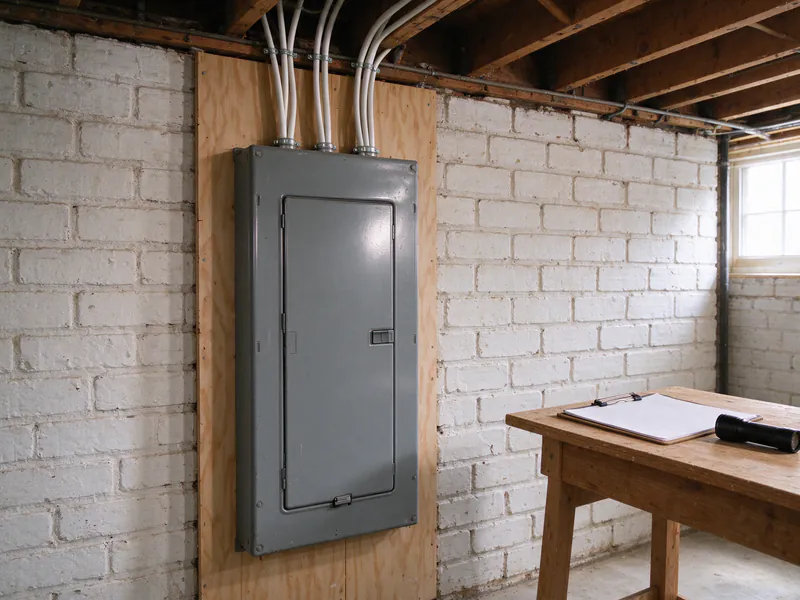
The visit starts at the panel or fuse box, because every branch circuit begins there. The electrician identifies each circuit, notes what protects it and its rating, and looks at the conductors leaving the enclosure. Two-wire cloth conductors at a fuse or breaker are one early indication that a run may be original.
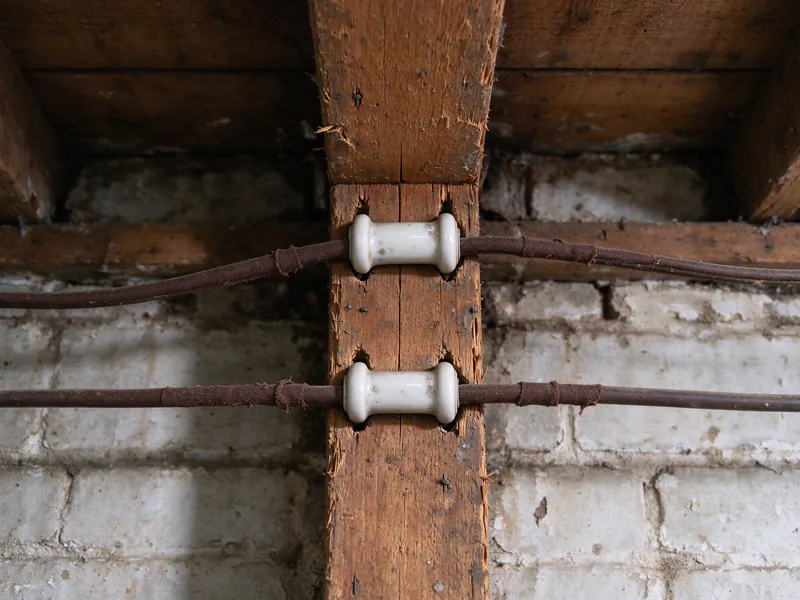
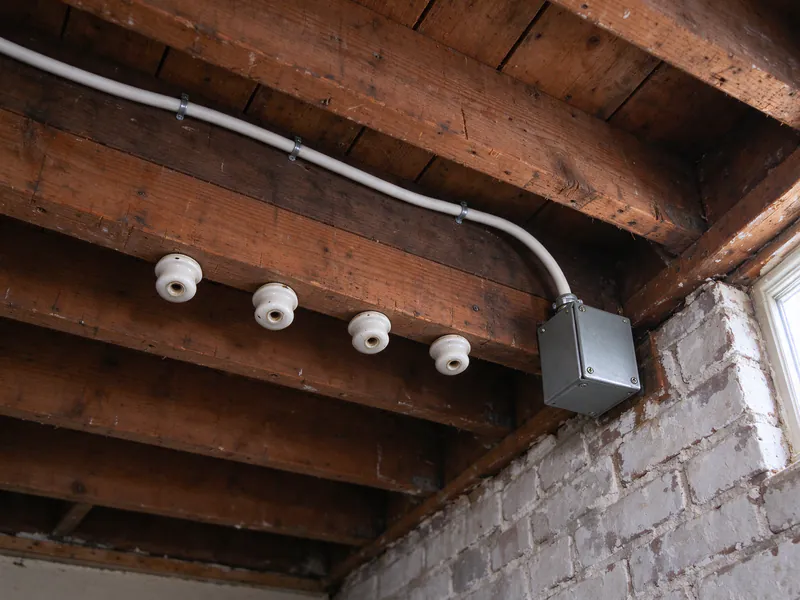
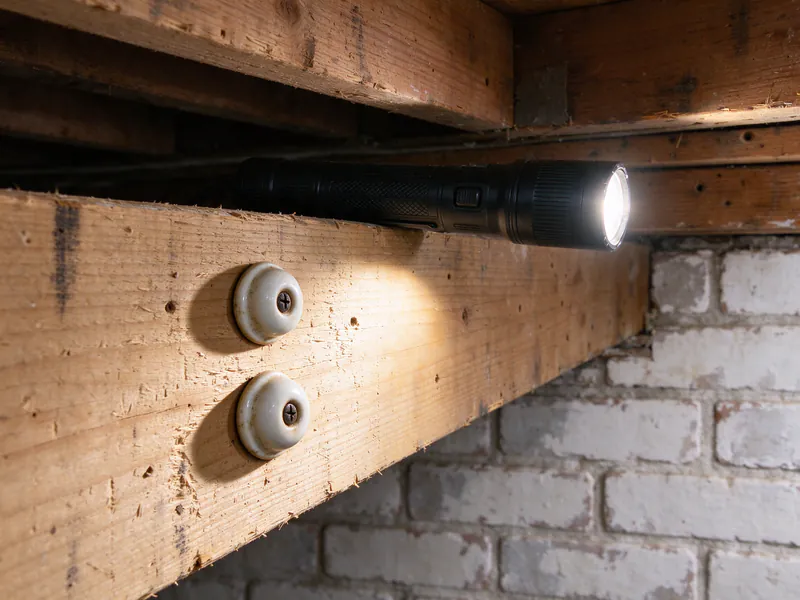
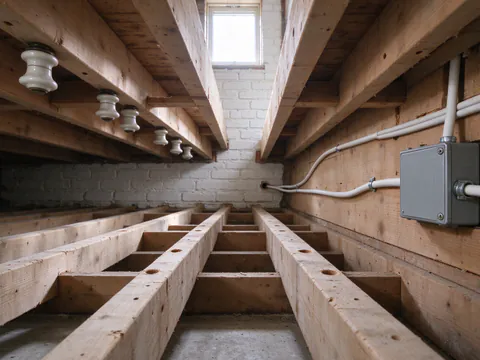
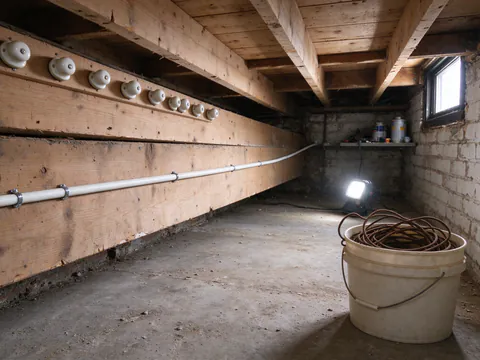
From there the work moves outward. Receptacles, switches and lights are matched to the circuits that feed them, typically by de-energizing one circuit at a time or by following a tracer signal back to the panel. In accessible spaces, such as an open basement ceiling, an unfloored attic or a closet with a hatch, the original runs are followed to see where they split, where newer cable joins them, and where a run ends in a cut or capped conductor. The electrician may use a multimeter, a circuit tracer or an inspection camera; homeowners should not try any of this, and a non-contact tester waved near a run is not an answer.
The result is a written map, not a verdict. It sorts the wiring into three groups: confirmed active, confirmed abandoned, and unverified. The guide to active and abandoned knob-and-tube explains why those three groups behave so differently once a scope is written, and the inspection checklist lists what a good report should contain.
When a Home Inspection Raised the Question
Home inspectors work to a visual standard across the whole house in a few hours. When they see porcelain knobs in a basement or a fuse box with two-wire circuits, the responsible report entry is a referral: K&T appears present, have a licensed electrician evaluate it. That entry is often read as a finding that the house is wired in K&T, which it does not say. It may describe one abandoned run left behind by a rewire decades ago, or it may be the first visible sign of a system still feeding half the rooms.
For a buyer, the gap between those two readings is usually the difference between a modest credit and a major renegotiation, and the inspection contingency period is short. A circuit map gives both sides the same facts: how many circuits are active, which rooms they serve, and what a replacement scope would include. The guide to buying a house with knob-and-tube covers how that information is used in a negotiation. Sellers who want to get ahead of the question can commission the same assessment before listing, so the disclosure describes what is actually there.
The assessment does not replace the home inspection or extend into roofing, plumbing or structure. It answers the electrical question the inspector handed on, in enough detail that someone can act on it.
What Can Be Confirmed Without Opening Walls?
More than many owners expect, and less than some sales pitches imply. Without opening plaster, an electrician can usually confirm which circuits exist at the panel, which rooms and devices each one serves, whether a given accessible run is energized, and where old and new wiring meet in reachable spaces. Circuit behavior adds evidence too: a bedroom receptacle and a hall light that go dead together are on the same branch, wherever that branch runs.
What cannot be confirmed is the condition of conductor insulation inside a closed wall, the exact path a run takes between two known points, or whether a splice exists in a ceiling cavity. Those are inferred from where a circuit starts and ends and from what it does. A sound report says which findings are observed and which are inferred, and it names the places where a small, planned access opening would turn an inference into a fact.
Photographs taken before the visit help with context but not with the answer. The guide to identifying knob-and-tube from photos explains what a picture can show. It also matters what the visible wire actually is: cloth-covered cable is not always knob-and-tube, and armored cable in the same basement may belong to a different era, as the comparison with BX wiring describes.
Tracing Active Circuits
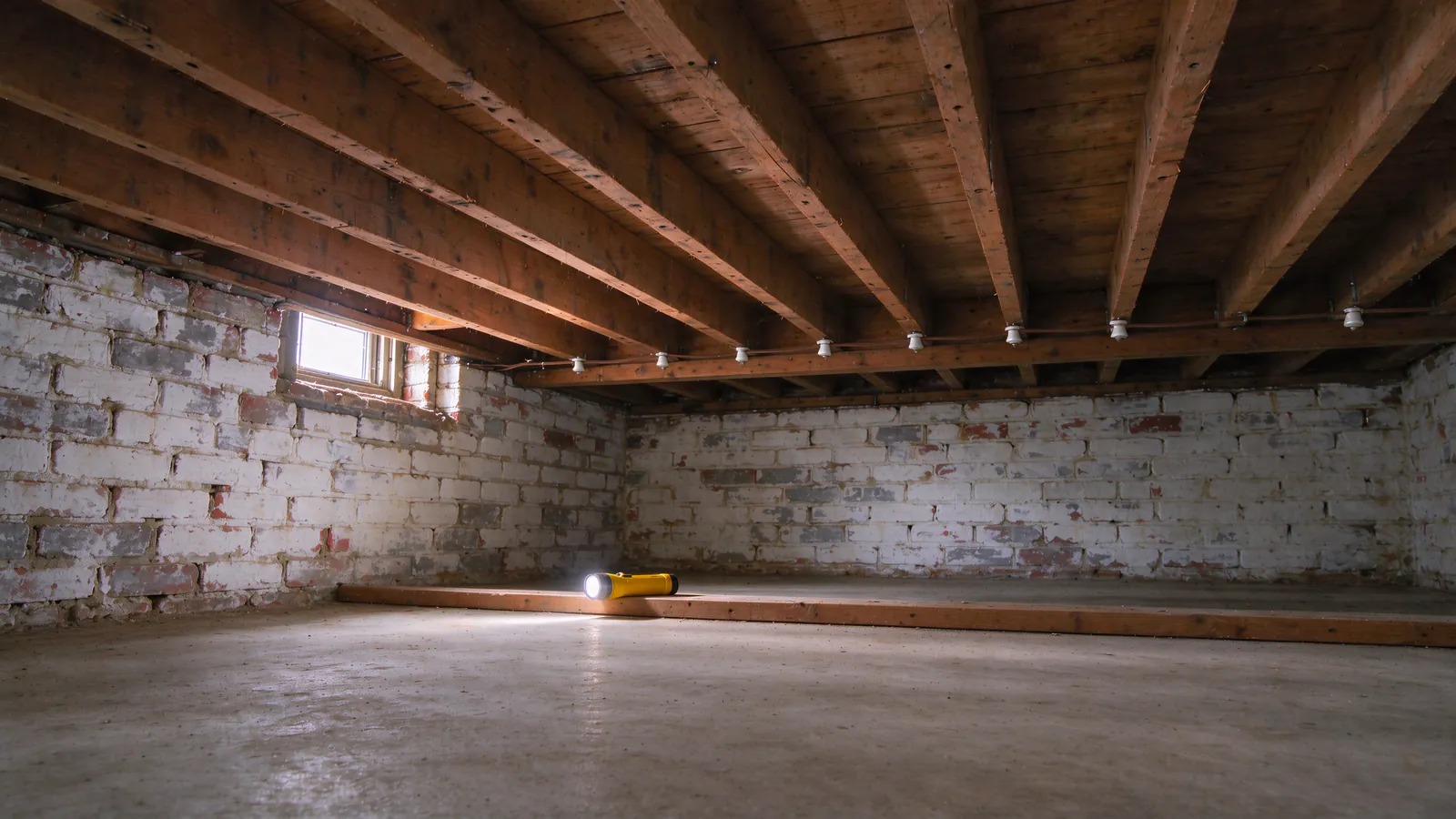
Tracing is the core of the work, and it is what separates this service from a walk-through. In a Philadelphia rowhouse with an open basement ceiling, first-floor circuits can often be followed along the joists from the panel to the point where they rise into a wall. Upper floors are harder. Where the attic is shallow or floored, or the basement ceiling is finished, the electrician relies more on circuit behavior and on the points where wiring surfaces at devices.
Mixed circuits get the most attention. A circuit can start at a modern breaker, run as modern cable for its first few feet, and then continue on original K&T through the rest of a floor. The reverse also happens: newer cable spliced onto an old run, feeding a modern-looking receptacle that depends on cloth conductors upstream. The guide to mixed K&T and modern wiring covers how those transitions are found. Old houses also hide shared neutrals, where two circuits return on one conductor, which can make a circuit look dead when only half of it is.
The point of all this is a map that a scope can be written against. “Second-floor lighting and the two front-bedroom receptacles are on active K&T, fed from the third fuse; the attic run above the rear bedroom is cut at both ends” is a finding a contractor can price. “Some K&T present” is not.
Panel, Connections and Grounding Review
The panel tells part of the story. A fuse box still in service, or a breaker panel with two-wire circuits landing on it, points toward original branch wiring. The protection on each circuit is checked against the conductor it serves, because a long-standing old-house problem is a fuse or breaker larger than the wire behind it can tolerate. That mismatch lets a circuit carry more current than its insulation was built for without anything tripping. Changing fuse or breaker sizes is never a homeowner task.
Connections come next. Original K&T splices were soldered and taped in open air, and many later connections were made wherever an extension was needed, sometimes outside any box. Where junction boxes are accessible, the electrician looks at what is inside them: old conductors spliced to newer cable, splices buried without a box, or boxes too crowded for the conductors they hold. The guide to K&T splices and junction boxes describes what a sound connection looks like and why the hidden ones matter.
Grounding is the third piece. Original K&T has no equipment grounding conductor. A three-slot receptacle on a two-wire circuit looks modern and is not grounded unless a ground path was added, and the assessment notes where that is the case. Some may be protected by a GFCI, which the code allows in certain situations without a ground; the guide to three-prong outlets on ungrounded wiring explains what that does and does not fix, and the AFCI and GFCI comparison covers the two kinds of protection.
Start with the circuit map
Before anyone prices a replacement, know which circuits are live and what they feed.
What the Assessment Changes
The map turns into a decision. If the active K&T is limited to one or two clearly bounded circuits, a partial knob-and-tube replacement can be scoped precisely, with the remaining wiring listed by name. If active circuits run through most of the house, a whole-home rewiring plan is usually the more coherent project. If the visible K&T turns out to be abandoned at both ends, the next step may be documentation or disconnection and removal rather than replacement. And where attic insulation is planned, the map shows whether the runs in that space are live, which is the question that decides attic K&T replacement.
Findings also change urgency. Scorching at a device, a splice with failed tape, or overfused circuits feeding heavily used rooms move work forward, and the guide to signs old wiring needs attention describes what those look like from the homeowner’s side. A house where active K&T is limited, intact and lightly loaded may support a planned schedule instead.
An assessment is not the same as a permit inspection. When replacement work is done in Philadelphia, a licensed electrical contractor pulls the L&I permit, the new wiring is tested, and a licensed third-party electrical inspection agency hired by the owner or the owner’s agent inspects it at rough-in and final. The circuit map is what makes that later work predictable: the scope that goes to permit is the scope the map supports. Testing at the end of a replacement checks the new circuits, their protection and their connections before the agency signs off, and the guide to the final inspection after rewiring describes what that approval covers. In a two-to-four-unit building, the map also shows which circuits cross unit lines or feed common halls and basements, which is the starting point for multi-unit replacement.
Cost and Access Factors
No published Philadelphia figure exists for K&T inspection and circuit mapping, so a fair price depends on the specific house. The effort grows with the number of circuits and floors, the number of units in the building, how much of the basement and attic is finished, and how many generations of wiring have been layered together. A written letter for an insurer or buyer, phrased to answer a specific question, is a deliverable to agree on in advance.
Access shapes both cost and certainty. Clear paths to the panel, attic hatch and basement let more of the system be observed directly. Stored belongings in an attic or a finished basement ceiling do not stop the work, but they push more findings into the inferred column. The assessment itself does not involve opening walls without your agreement; where a small opening would answer a specific question, that is proposed and approved first.
The assessment can be useful on its own, and it also feeds the price of what follows. The Philadelphia cost guide explains how the number of active circuits drives replacement budgets, and the guide to hiring a K&T electrician in Philadelphia covers what to ask before booking any visit. Philly Knob & Tube serves houses across the city, listed on the service areas page.