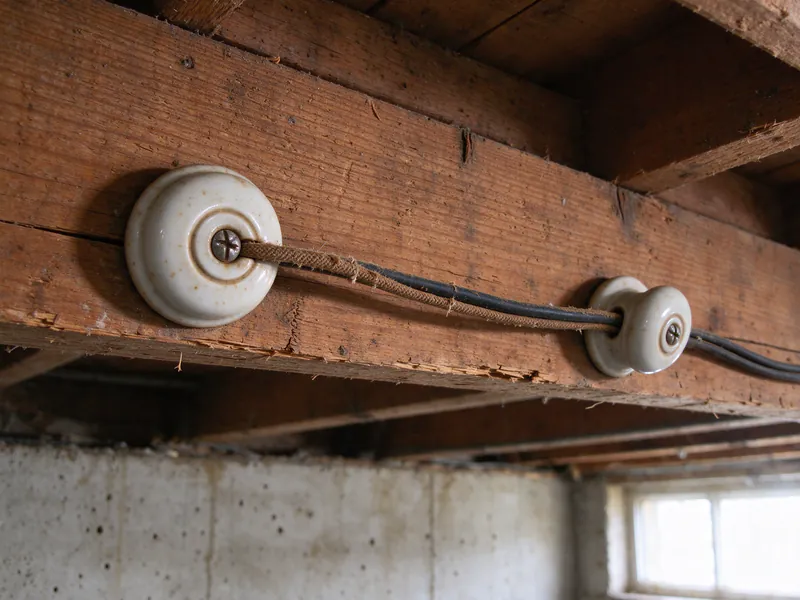
Philly Knob & Tube arranges knob-and-tube removal in Philadelphia, with licensed electrical contractors doing two related but separate jobs: safely disconnecting runs that are still live, and physically taking out abandoned material where removing it is worth the disturbance. The two get confused constantly. A house can be free of active K&T and still have porcelain knobs and cloth conductors in every joist bay, and a house with no visible K&T can still have a live run inside a wall.
Most removal questions start with something visible. An insulation contractor sees porcelain in the attic and stops. A buyer’s inspector photographs cloth conductors in the basement. An insurer asks whether knob-and-tube “has been removed.” What each of them actually needs is usually a statement about live wiring, not a pile of old wire, and the first job is working out which one applies.
What Happens on the First Visit
Nothing is cut until its status is known. The electrician identifies each circuit at the panel, matches the rooms and devices to those circuits, and follows accessible K&T runs in the attic, basement and closets to see where they start, where they end and what joins them along the way. Runs that end in cut or capped conductors are noted, and so are places where newer cable has been spliced onto an old run, because those splices are how a run that looks dead stays live.
The outcome is a list of runs in three states: live and serving something, dead at both ends, and uncertain. If a knob-and-tube inspection and circuit map has already been done, the visit starts from it. The visit also notes what a removal would involve physically: how much insulation, flooring or stored material sits on top of the runs, whether the basement ceiling is open, and whether any runs disappear into finished walls where pulling them would mean opening plaster.
Active, Disconnected and Abandoned Wiring
The words matter because they describe different risks. Active K&T carries current today. Disconnected K&T has been cut off from its source, but if it was cut at only one end it may still connect, through a splice further along, to something that is live. Abandoned K&T is disconnected at both ends, verified dead, and no longer part of any circuit. Only abandoned runs are inert.
A partial or mixed house can contain all three. A rewire done thirty years ago might have cut the old circuits at the fuse box but left their far ends connected to a ceiling box that a later owner extended. A run that looks identical to its neighbor can be the last feed to a bedroom. The guide to active and abandoned knob-and-tube explains why appearance never settles the question, and why only tracing and testing do.
This is also why “removing K&T” and “replacing K&T” are not interchangeable. A live run is powering something. Taking it out without new wiring leaves those lights and receptacles dead, which is rarely what anyone wants. Where a live run serves rooms in use, removal is the last step of a partial replacement or a whole-home rewire, not a job of its own. Removal without replacement fits runs that already serve nothing, or circuits whose loads are being deliberately eliminated.
When Physical Removal Is Necessary
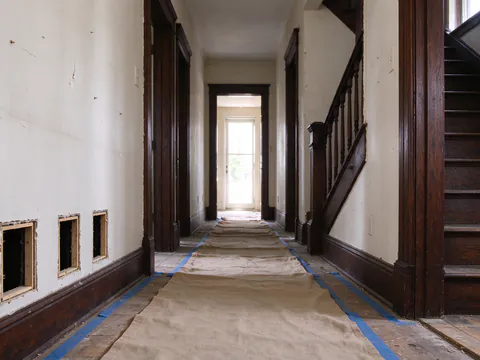
Often it is not. An abandoned run inside a finished plaster wall, disconnected at both ends and documented, is inert. Pulling it out means opening the wall along its route, and the damage to plaster, trim and paint usually outweighs any benefit. Leaving it in place, recorded, is the normal outcome.
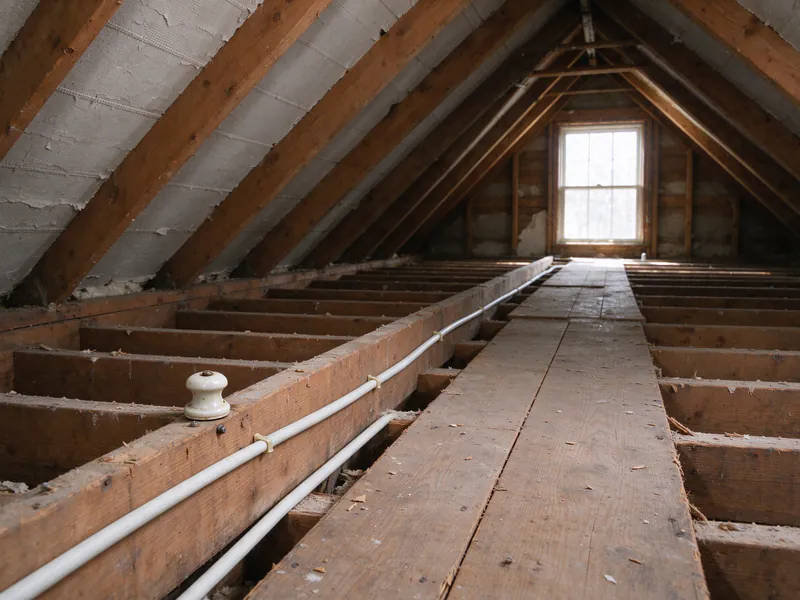
Removal earns its cost in a few situations. In an attic about to be insulated, taking out the accessible dead runs removes any question for the insulation contractor and for future inspectors; the guide to knob-and-tube and insulation explains why insulation and K&T are a sensitive combination in the first place. In a room being gutted for renovation, the old runs are exposed anyway, and leaving them in the new walls only creates confusion later, as the renovation replacement page describes. In an open basement ceiling, dead runs left hanging invite exactly the misreading a buyer’s inspector will make. And where old material is damaged, crumbling or tangled with newer wiring in a space being finished, clearing it simplifies everything that follows.
Some owners want every visible piece gone so that nobody, now or later, mistakes a dead run for a live one. That is a reasonable goal for accessible spaces, and it should be priced as its own line rather than assumed. Where the attic or basement holds old insulation or other material of unknown composition, the guide to asbestos and old house rewiring explains why that is checked before anything is disturbed.
Live, dead or uncertain?
Removal begins with tracing. Tell us where the old wiring is and who is asking about it.
Isolation, Verification and Documentation
Disconnection is done in an order. The run’s source is identified, whether a fuse, a breaker or a splice into another circuit, and it is disconnected there. Its far end is found and disconnected too, at the last device or the last junction. Conductors at accessible termination points are cut back and capped so they cannot touch anything. The run is then tested with proper instruments, under safe working procedures such as locking out the source, to confirm it carries no voltage, including with the surrounding circuits switched on. That last check catches the hidden splice that a single cut would miss.
Each step is recorded. A useful record lists every run that was disconnected, where it was cut at each end, how it was verified, whether it was removed or left in place, and which runs, if any, remain active. The panel is relabeled so that an empty fuse position or breaker is not mistaken for a spare circuit later. Photographs of accessible terminations help.
That record is what insurers and buyers usually want. A removal letter for an insurer has to describe what was actually done, so the wording should be agreed before the work: “no active knob-and-tube remains in the house” is a different claim from “the attic knob-and-tube was disconnected and removed,” and only the electrician who verified it can sign either. The inspection checklist lists the details a good record contains.
Whether a disconnection-only job needs an L&I permit depends on what is altered, and the licensed electrical contractor makes that call. When disconnection is part of a replacement, it falls under that job’s electrical permit and its third-party inspections.
Leftovers From an Earlier Rewire
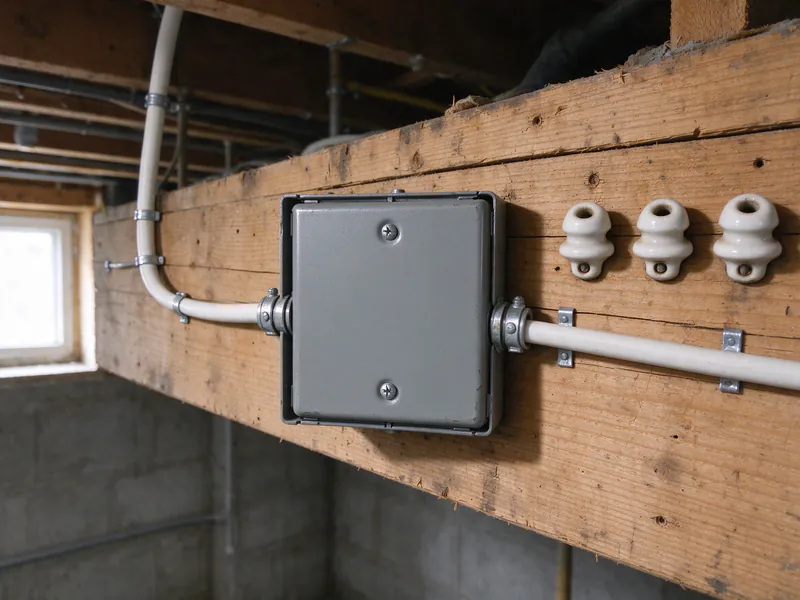
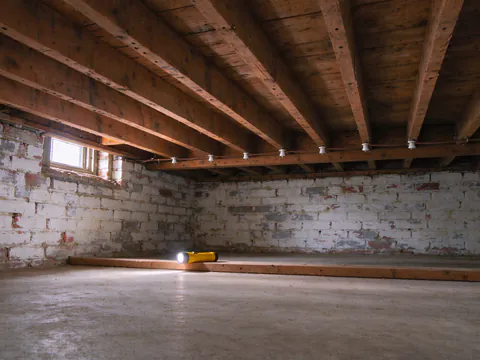
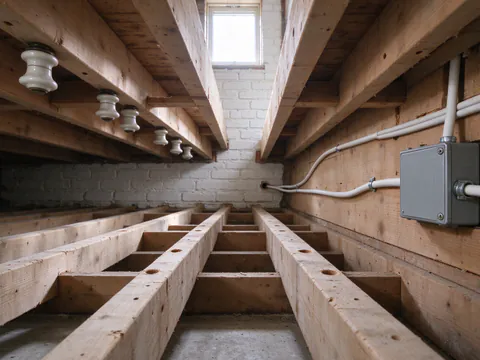
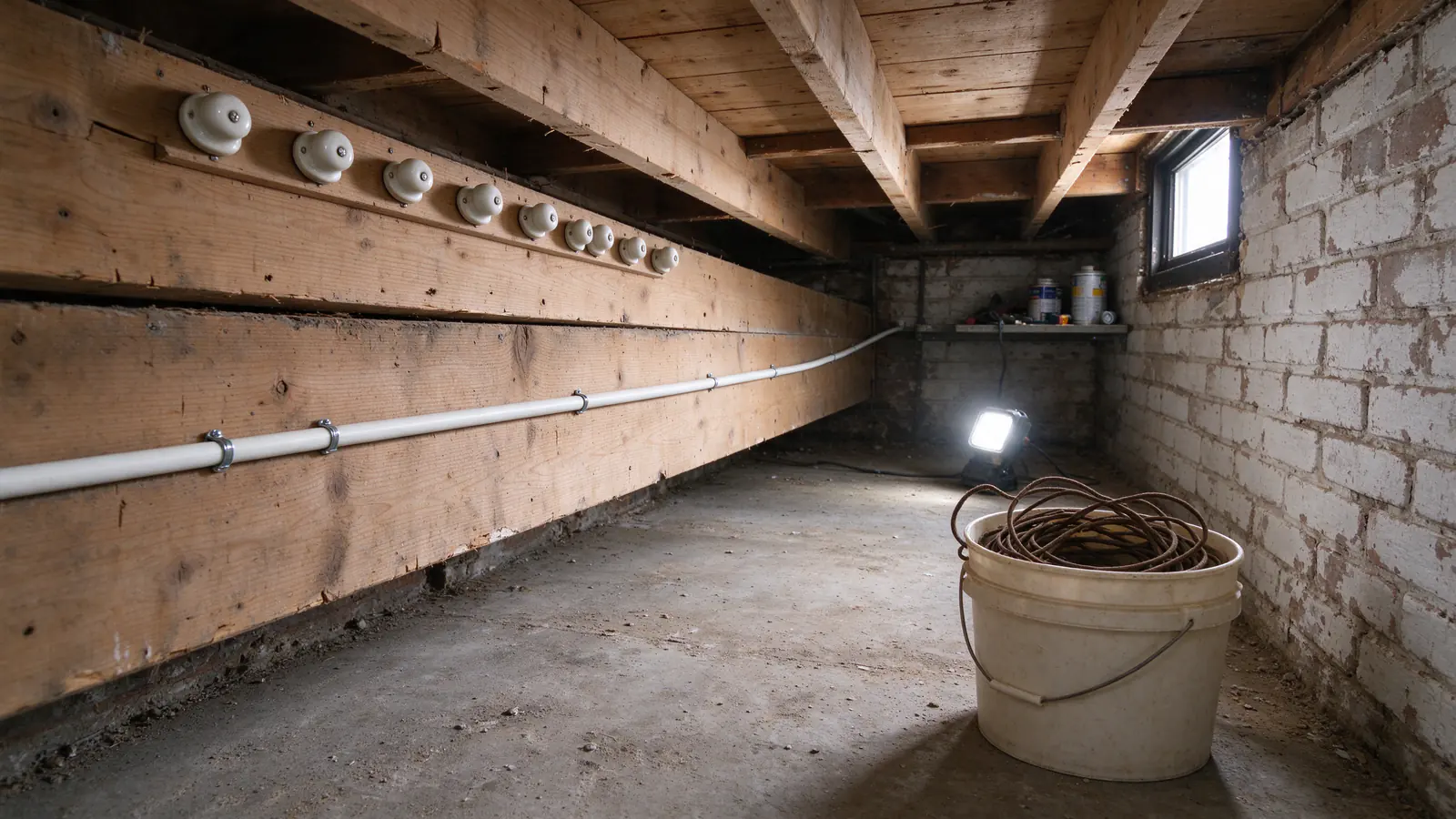
One version of this job involves no live K&T at all. A previous owner rewired the house, perhaps decades ago, and the electrician ran new circuits without taking the old ones out. The basement joists still carry rows of porcelain knobs; the attic still has cloth conductors running to the old ceiling drops. Everything works on modern wiring, but every inspector who walks through writes “knob-and-tube observed.”
Here the work is mostly verification and paperwork. Each visible run is traced to confirm it is dead at both ends and not spliced to anything newer, the accessible material is removed if the owner wants it gone, and the record states plainly that the remaining K&T is abandoned. That record is often worth more than the removal itself, because it answers the question a buyer’s inspector or insurer will otherwise keep asking. The guide to buying a house with knob-and-tube and the homeowners insurance guide both turn on this same distinction between present and active.
Sometimes the trace turns up a surprise: one run that the earlier rewire missed, still feeding a closet light or a single receptacle. That is the reason the tracing comes before the removal. A circuit found live is either replaced, which makes it a small partial replacement, or, if the device it feeds is no longer wanted, disconnected and documented as decommissioned.
In a two-to-four-unit building, leftovers can cross unit lines, so tracing may need access to more than one apartment and to common basements and halls. Owners arrange that access and notice to occupants; the electrician confirms whether any run still serves a unit or a shared light before it is cut.
Removal During Replacement Work
Most K&T is disconnected and removed as part of a replacement, and the sequence matters. New circuits are run first, through the basement, attic, closets and planned openings. The loads are moved onto the new wiring at the panel and at each device. Only then are the old runs disconnected at both ends and verified dead, so no room is left without power longer than necessary and nothing old stays connected by accident.
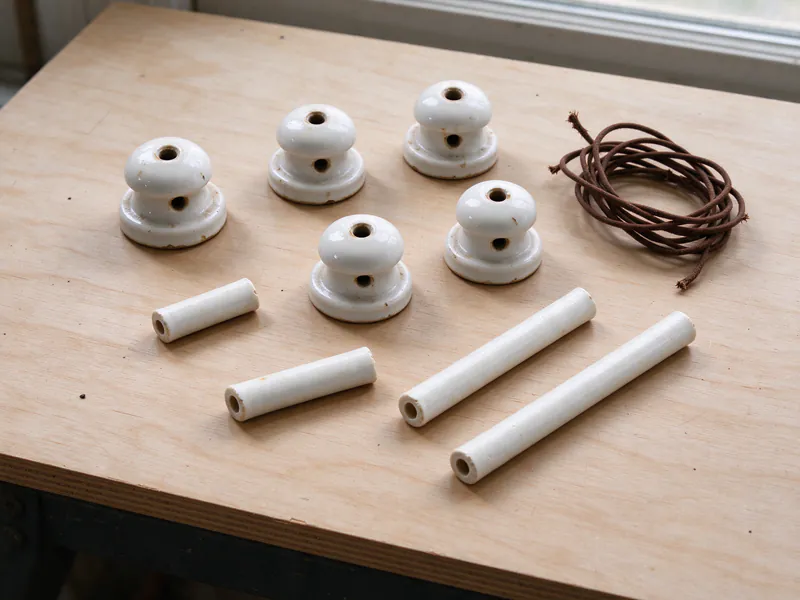
Physical removal then follows access. Accessible runs in attics and open basements are typically pulled out along with their knobs and tubes, because they are easy to reach and leaving them invites confusion. Runs inside finished walls are usually abandoned in place and recorded, because the new wiring already took a different route and opening the walls again would add damage for no electrical gain. The guide to partial or full replacement covers how the scope of the new wiring is chosen.
The closing paperwork should reflect that split. It is accurate to say the active K&T was replaced and disconnected and the accessible remnants removed. It is not accurate to say all knob-and-tube was removed from a house where dead runs remain in the walls, and a careful record avoids that wording.
What Determines Removal Cost
There is no published Philadelphia price for knob-and-tube removal without replacement, so a fair price depends on the runs involved. The count and length of runs matter first, and so does verification: every run has to be traced and tested before it is cut, and a tangle of old and newer wiring takes longer to sort out than a few clean runs.
Access drives most of the rest. An attic with loose insulation over the joists, flooring laid on top, or very little headroom is slower to work in than an open one. A finished basement ceiling limits what can be reached without openings. Removal from an open basement ceiling in a rowhouse is usually quicker than the same length of run under attic flooring, because every joist bay can be reached from a ladder. Disposal of the removed material, any panel work needed to disconnect cleanly, and a written letter for an insurer or insulation contractor are separate items worth seeing on the quote.
When removal is part of a replacement, it is usually included in that scope rather than priced alone. The Philadelphia cost guide sets out planning ranges for replacement. For removal-only work, ask for a scope that lists each run, how it will be verified, whether it will be removed or left, and what record you will receive. Philly Knob & Tube serves houses across the city; the service areas page lists the neighborhoods.