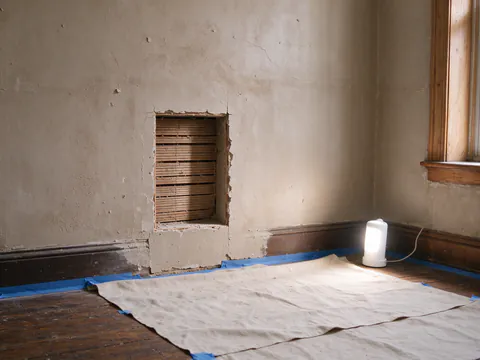
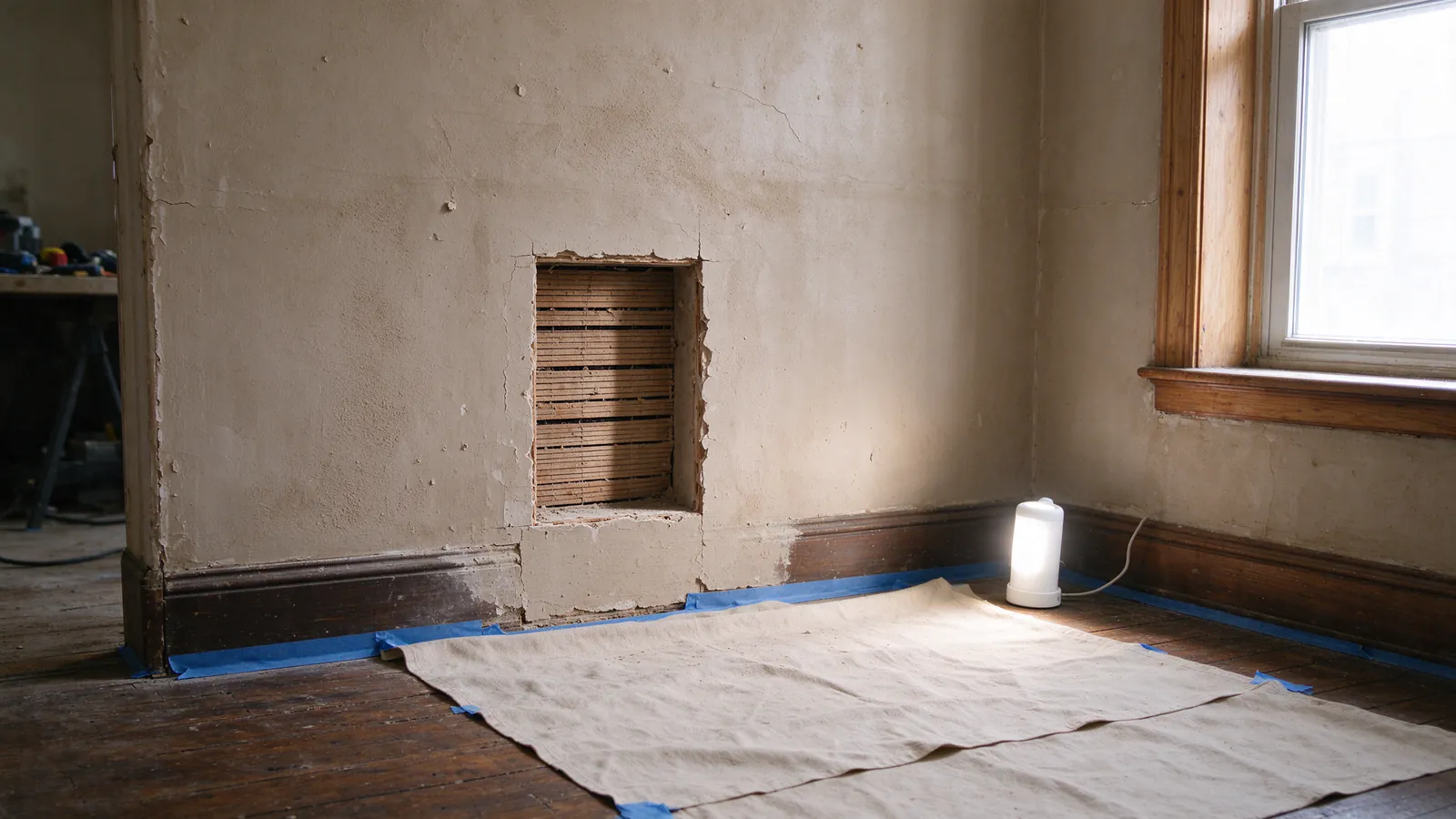
Rewiring an older house can disturb materials that may contain asbestos, including some plasters and joint compounds, pipe insulation, attic fill and certain heat-resistant wiring. You cannot tell by looking. When openings are planned in suspect materials, a qualified asbestos inspector should sample them first, and any removal belongs to a certified abatement contractor, not the electrician.
Philly Knob & Tube manages knob and tube replacement in Philadelphia homes, with the wiring carried out by licensed electrical contractors; it does not test for or remove asbestos. This guide explains where the question arises during a rewire, what Philadelphia’s rules say and how the answer reshapes the electrical plan.
Why historic materials may need assessment
Asbestos was added to a wide range of building products through much of the twentieth century because it resists heat and strengthens other materials. A house wired with knob and tube was built before most of that use, but it has usually been heated, repaired and renovated many times since. Each round could have added materials that a rewire now has to cut through or work beside.
The materials that come up most often in old-house rewiring are:
- Plaster, skim coats and joint compounds. Some plasters and many joint compounds made in the mid-twentieth century contained asbestos. In an older house the original plaster may be lime-based and later patches may be something else, so one wall can contain several materials.
- Textured ceilings. Sprayed or troweled ceiling textures from some eras can contain asbestos, and ceiling fixtures are a common place for new wiring to arrive.
- Pipe and boiler insulation. Steam and hot-water heating pipes in basements were often wrapped. Where a rowhouse basement has old wrapped pipes running along the same joists as the electrical runs, routing has to take them into account.
- Attic fill. Loose-fill vermiculite, a granular, pebbly insulation, may be contaminated with asbestos. If it sits on the attic floor around knob and tube, disturbing it to reach the wiring is a concern. The insulation guide covers the electrical side of that same attic.
- Some wire insulation. Certain heat-resistant wiring, particularly in some light fixtures and near heating equipment, was made with asbestos-containing insulation or sleeving. Ordinary knob and tube conductors were typically rubber with a cloth braid, but nobody should assume which is which without testing.
- Floor tiles, flue and duct wrap, and backing papers. These may be cut or drilled when a cable has to pass through a floor or past a chimney.
None of this means a given house contains asbestos. It means the materials that may be disturbed should be identified before the work plan is fixed, especially in plaster walls where openings are the method. The plaster wall rewiring service describes how those openings are planned.
Why only testing answers the question
Asbestos fibers are microscopic, and asbestos-containing materials look and feel like their asbestos-free equivalents. Age, color and texture are not reliable. A material is confirmed one way or the other only when a qualified inspector takes a sample and a laboratory analyzes it.
Sampling is itself a disturbance, done with controls to keep fibers from spreading. It is not a homeowner task, and this guide does not describe how to do it. If you want to know, hire an accredited asbestos inspector. In Philadelphia, the regulation calls this person an independent certified asbestos investigator.
Until testing is done, the practical choice is to treat suspect materials as if they contain asbestos and plan so they are not disturbed.
Philadelphia’s asbestos rules in brief
Philadelphia regulates asbestos through its Department of Public Health. The Asbestos Control Unit within Air Management Services administers the city’s Asbestos Control Regulation, adopted under the Philadelphia Health Code.
Three points from the regulation matter for a rewire:
- Survey before permit, for larger buildings. The regulation requires an asbestos inspection report before a permit is issued for alteration or demolition. That requirement does not apply to residences with three or fewer dwelling units, or to buildings whose building permit was issued after December 31, 1980. A four-unit building can therefore fall under it. The multi-unit replacement page covers other differences for larger buildings.
- Private residences still count. The regulation defines a private residence as a residential structure with fewer than four dwelling units. In a private residence, disturbing more than 12 square feet of friable asbestos material, or more than 3 linear feet of asbestos pipe covering, is treated as an asbestos project with its own requirements.
- Certified people do the work. Inspections are made by certified asbestos investigators, and abatement by certified asbestos contractors and workers.
The regulation is detailed and changes from time to time, so treat this as orientation. Questions about a particular project go to Air Management Services or to the asbestos professional you hire.
Avoiding unnecessary disturbance
The best asbestos plan for a rewire is often one that avoids touching suspect materials at all. Because knob and tube replacement relies on access paths rather than demolition, there is usually room to choose:
- Route around suspect surfaces. If a textured ceiling is untested, the new feed to that fixture may come from the attic above rather than through the ceiling.
- Use paths that do not involve plaster. Closets, chases, basement joists and attic floors may avoid cutting walls at all. The guide to replacing knob and tube without gutting walls covers these routes.
- Stay clear of wrapped pipes. In a basement, new cable can often run on joists away from old pipe insulation.
- Leave dead wiring in place. Removing abandoned knob and tube from an attic full of vermiculite disturbs more than disconnecting it and leaving it documented.
Planning around materials this way is easier when the access plan is made early. The plaster wall rewiring service explains how openings are chosen, and the same choices that protect finishes also tend to limit how much old material is disturbed.
Avoidance has limits. Some rooms cannot be reached without opening a wall, and some materials sit exactly where the cable must go. That is when testing becomes part of the plan rather than an option.
Coordination with qualified specialists
When testing is needed, the order of work matters:
- Assessment and routing plan. The electrician identifies where openings, drilling or attic work are needed.
- Testing. An asbestos inspector samples materials at those locations, and the lab reports results.
- Abatement if needed. If a material is positive and must be disturbed, a certified abatement contractor removes or encloses it under the city’s rules, with clearance at the end.
- Electrical work. The electrician proceeds once the area is cleared.
Each specialist has a separate scope and contract, and the schedule needs to allow for lab turnaround and any abatement. If an electrician unexpectedly uncovers a suspect material mid-job, the right response is to stop work in that area until it is assessed.
Lead paint: a related rule for pre-1978 homes
Asbestos is not the only material question. Paint in a house built before 1978 may contain lead, and cutting plaster or removing trim disturbs painted surfaces. Under the U.S. Environmental Protection Agency’s Renovation, Repair and Painting Rule, firms paid to disturb more than six square feet of painted surface per interior room in pre-1978 housing must be lead-safe certified and follow lead-safe work practices, such as containment and specialized cleanup. Ask whether the contractor doing the openings, and anyone doing the patching, is certified. The guide to historic Philadelphia homes covers related concerns about original finishes.
Questions to settle before the first opening
A short conversation before work starts prevents most of the surprises. Settle these with the electrical contractor and, if one is involved, the asbestos inspector:
- Where will openings, drilling and attic work happen? A routing plan marked on a floor plan makes it possible to test only the materials that will actually be disturbed.
- Which materials at those locations are untested? Plaster, ceiling texture, pipe wrap and attic fill are the usual candidates.
- What happens if something suspect turns up mid-job? Agree in advance that work in that area pauses, and who arranges the assessment.
- Is old wiring being removed or left in place? Removing abandoned runs disturbs more material than disconnecting them, which matters in a dusty attic. The guide to mixed old and new wiring explains why some old runs need tracing before anyone decides.
- Will the household stay in the house? Containment and cleanup plans differ for an occupied home; the guide to living at home during rewiring covers the practical side.
At the end of the job, keep any test results and abatement clearance records with the electrical paperwork. A future buyer or contractor will want both, and the guide on what to expect after replacement covers the rest of that file.
How this changes the electrical scope
Testing and abatement change three things about a rewiring project. They change the schedule, because testing and any abatement come before openings. They change the route, because a confirmed material may push the electrician to a different path. And they change the budget, because testing and abatement are separate costs that an electrical quote normally excludes.
When comparing proposals, look for how each one handles this: does it mention hazardous materials, exclude them explicitly, or say nothing? The quote comparison guide shows where that belongs, and the preparation guide covers what to settle before work begins. If testing results are already in hand, or you want to plan around untested materials, the contact page is the place to share them.