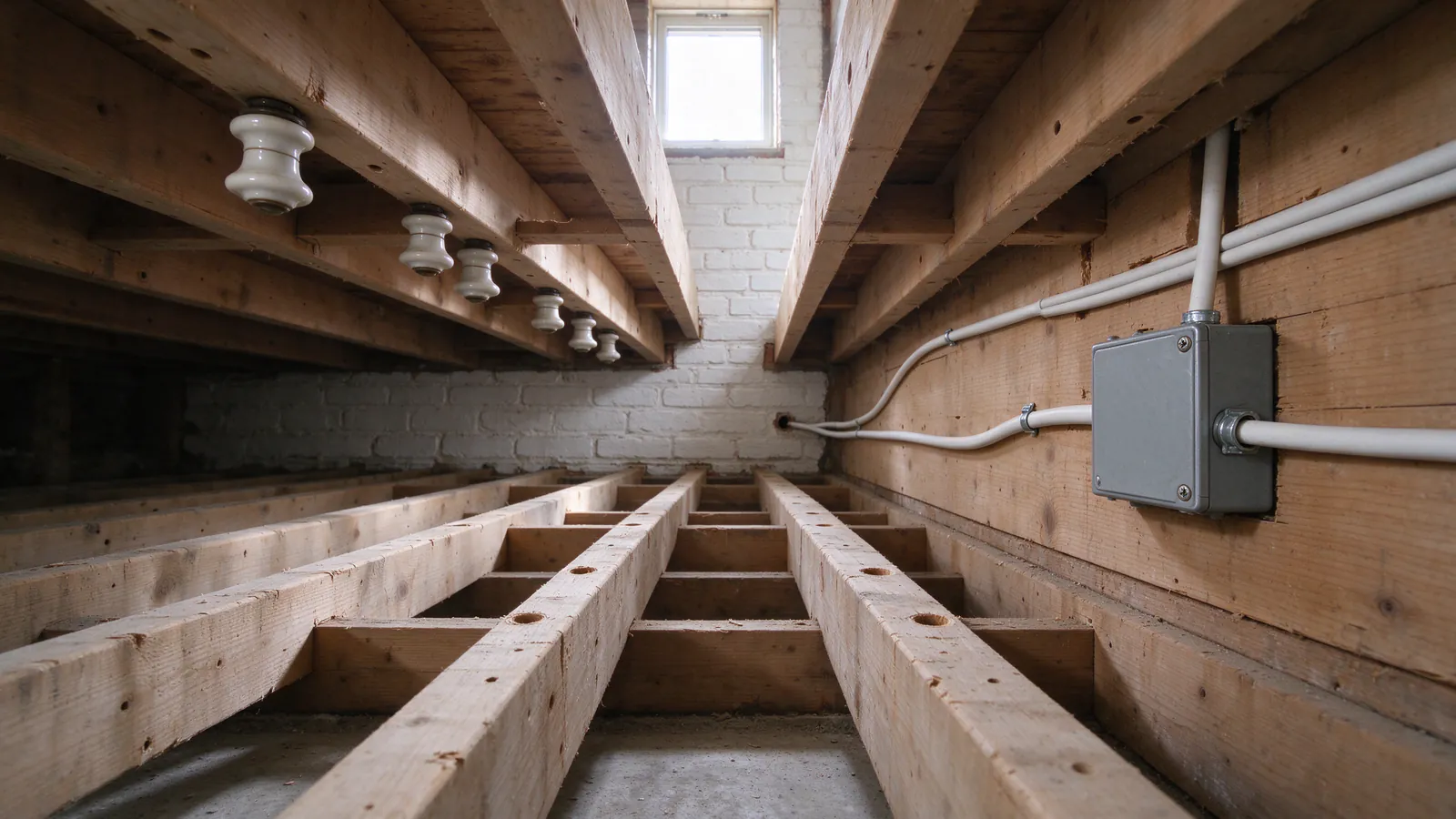
Philly Knob & Tube arranges partial knob-and-tube replacement in Philadelphia: licensed electrical contractors replace the specific old circuits that matter most now, disconnect them so they cannot be re-energized, and record exactly which ones stay. It suits a house that has already been rewired in pieces, where a remodeled kitchen, a newer bathroom and a converted panel leave a handful of original circuits still in service.
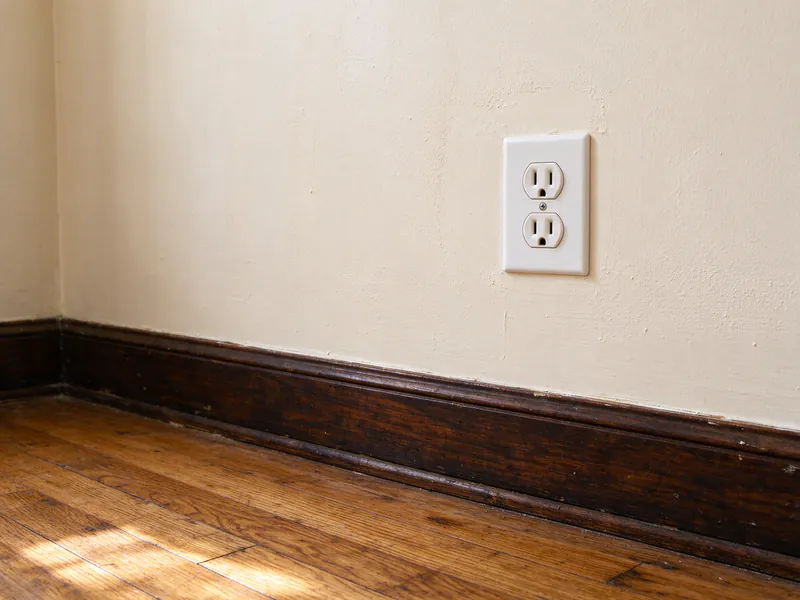
A house renovated in stages is also where mistakes are easiest. Visible receptacles do not show which circuit feeds them, a three-slot outlet can sit on a two-wire run, and a room that looks finished can depend on cloth conductors in the ceiling. A partial job planned room by room, without knowing where each circuit goes, can leave live K&T in places nobody expected.
What Happens on the First Visit
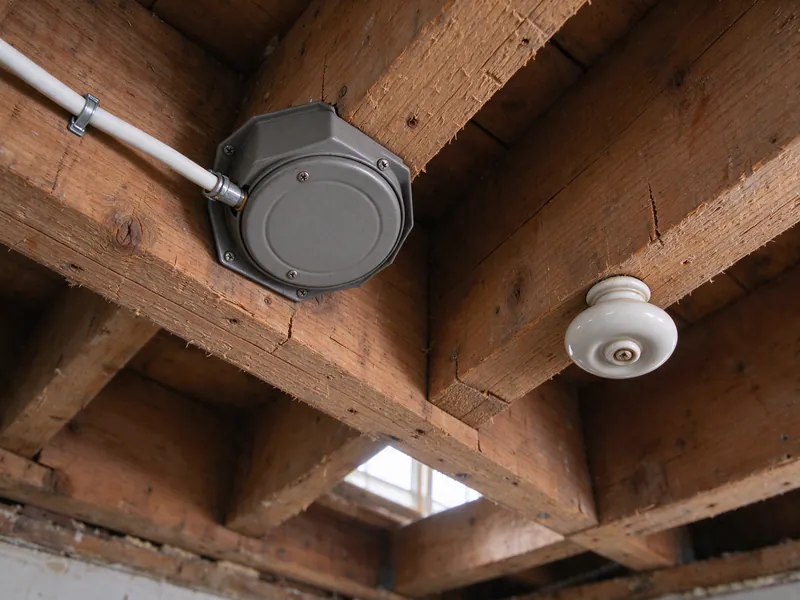
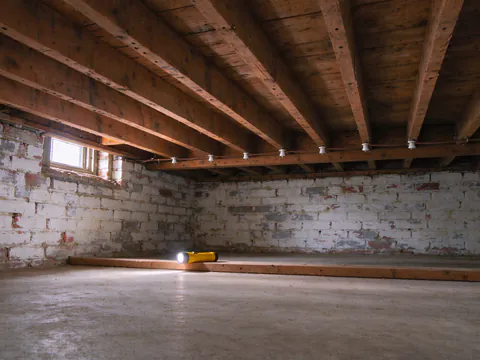
A partial scope is only as good as the map behind it, so the first visit is about finding the boundary between old and new. The electrician identifies each circuit at the panel, matches receptacles and lights to those circuits, and follows accessible runs in the basement and attic to see which are original, which were extended with newer cable, and which are already cut dead. If a knob-and-tube inspection and circuit map has been done, this step starts from it rather than repeating it.
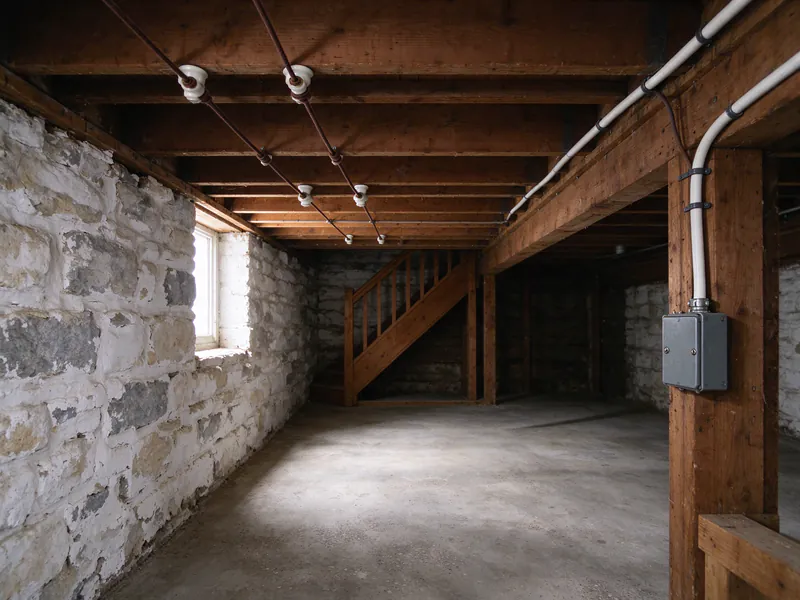
The visit also looks at access for each candidate circuit. A first-floor receptacle circuit in a rowhouse with an open basement ceiling may be reachable from below with very little disturbance. A second-floor lighting circuit under a floored attic or a finished ceiling is a different job, even though both count as one circuit. That difference, more than the circuit count, decides what a partial project involves.
When Partial Replacement Makes Sense
Partial replacement fits when the active K&T is limited and clearly bounded. Typical cases include a house where a previous owner rewired the first floor but left two upstairs lighting circuits, a house where only the attic runs remain because the rest was replaced during a remodel, and a house where one or two circuits feed the rooms with the heaviest load while the rest of the K&T is lightly used. In each, the old wiring that stays can be named and described.
It also fits a budget or a calendar. Some owners replace the circuits serving the kitchen, bathroom and bedrooms first, then plan the rest around a later renovation. Others need one area cleared before a specific event, such as an attic insulation job, which is the subject of attic knob-and-tube replacement.
Sales create a third kind of partial job. A seller whose house has two or three circuits of active K&T left may choose to replace exactly those before listing, so the disclosure can describe a house with no active knob-and-tube and a permit to show for it; the guide to selling a house with knob-and-tube weighs that against offering a credit. A buyer may do the reverse after closing, starting with the circuits the inspection flagged and leaving lightly used runs for a later phase. Either way, the value of the work depends on the paperwork naming what was replaced and what was not.
Partial work fits poorly when active runs are spread through most of the house, when later splices make the circuits hard to separate, or when an insurer has asked for removal of all active K&T. In those cases a whole-home rewiring plan is usually more coherent, and the partial versus full replacement guide walks through that choice in more depth.
How Individual Circuits Are Scoped
Each circuit in a partial scope is defined from end to end: where it starts at the panel, which rooms and devices it serves, and where it ends. That definition matters because K&T circuits rarely follow room boundaries. An original lighting circuit might feed the ceiling fixtures on a whole floor plus a receptacle added later in one bedroom. Replacing “the front bedroom” without following that circuit can leave the rest of it live and now fed from an unexpected place.
Priority usually follows load and condition. Kitchen and bathroom receptacles carry the heaviest appliances and sit near water, so they often go first, and replacing them brings GFCI protection where the code requires it. Circuits with later splices come next, especially connections made without a box, because a splice added decades after the original installation is often weaker than the original soldered joint. Circuits feeding window air conditioners or space heaters are early candidates because the original layout assumed a few lights and little else, which the guide to modern appliance loads on old wiring explains.
The new circuits are built to the 2020 NEC that Philadelphia uses for altered work. That typically means arc-fault protection for living areas and ground-fault protection for kitchens, baths and other wet locations, with an equipment grounding conductor in the new cable. The AFCI and GFCI guide explains what each kind of protection does.
Know where the old wiring stops
A partial job begins with a circuit map. Share what the inspector or insurer flagged and which rooms are involved.
What Happens to the Wiring That Remains?
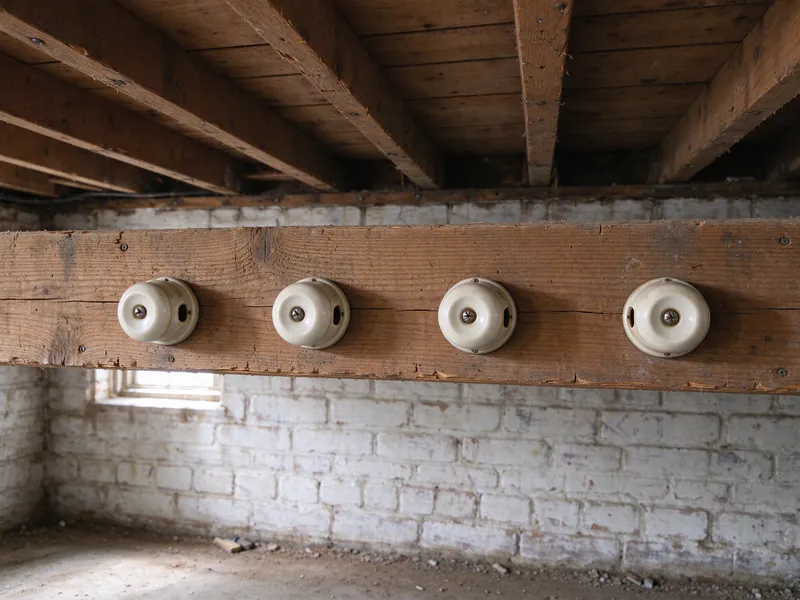
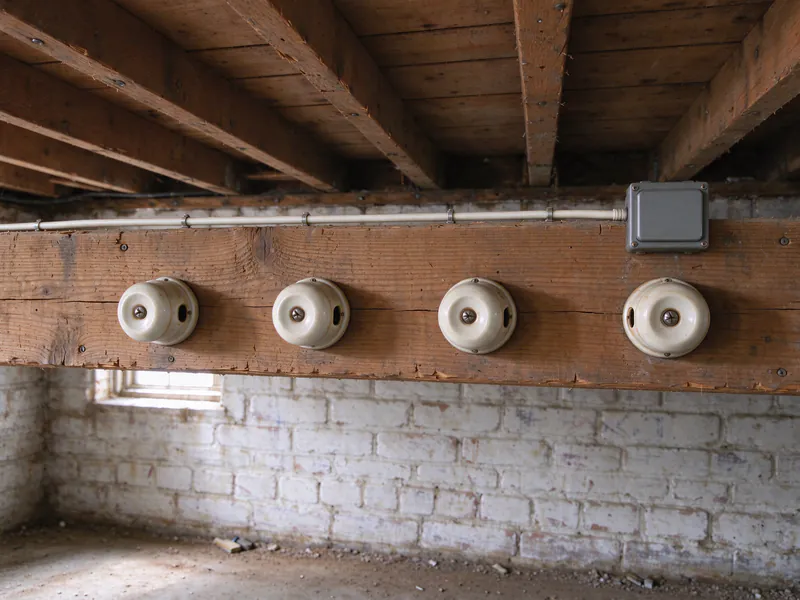
A partial replacement leaves two systems in one house, so the boundary between them has to be clean and written down. Every circuit taken out of service is disconnected at its source and at its far end, so it cannot be fed again by a forgotten splice or by later work. Whether the old conductors are then pulled out or left in place is a separate decision covered on the knob-and-tube removal page; abandoned runs inside finished walls are often left, documented, rather than torn out through plaster.
The circuits that stay are listed by name with the rooms and devices they serve. That list is what a buyer’s inspector, an insurer or a future electrician needs. Without it, a house is easily described as “rewired” when it is not, which is the misunderstanding most likely to cause trouble at a sale or after a claim. The guide to active and abandoned knob-and-tube explains why a run cut at only one end can still be live.
The remaining circuits keep their original limits. They still have no equipment ground, their insulation is still decades old, and they are still sized for the loads of their era. A partial job does not improve them, and it should not be described as if it did. What it can do is take load off them: moving the kitchen and bathroom onto new circuits often leaves the remaining K&T serving only lights and a few receptacles.
Routing a Few Circuits Through a Rowhouse
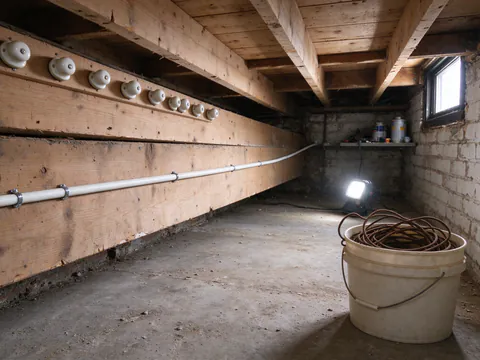
In a narrow attached house, the route for a single replacement circuit is often longer than its floor plan suggests. Masonry party walls on both sides are not cable chases, so new wiring has to travel through interior partitions, floor framing, closets or stair walls. Where a rowhouse has an open basement ceiling, first-floor receptacle circuits can often be fed from below with a small hole at each box. Where the second floor is the target, the route might rise through a closet or a plumbing chase, or come down from an accessible attic, and a few planned openings in plaster may be the least disruptive option.
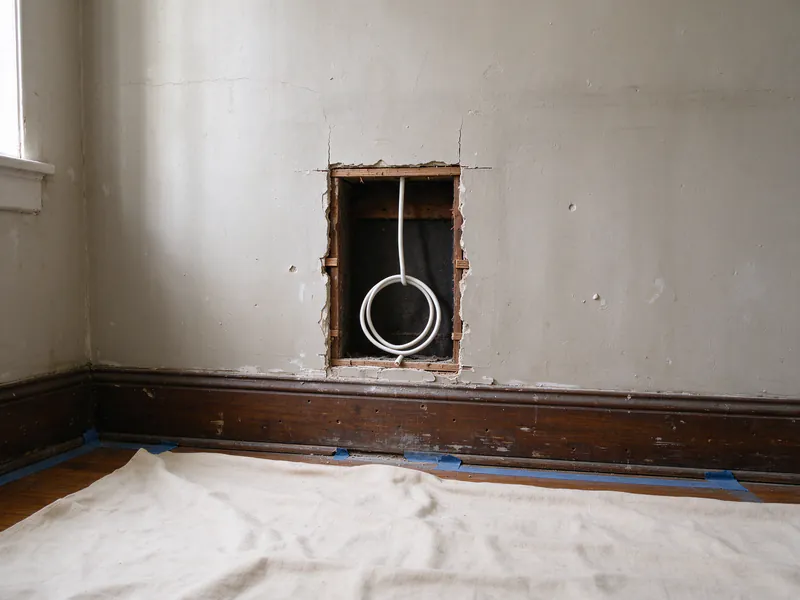
Because a partial scope touches only some rooms, it is worth asking where each opening will be before work starts, and who patches it. Rooms with ornamental plaster or original trim may justify a longer route that avoids them, which is the kind of choice the plaster-wall rewiring page discusses. The guide to replacing K&T without gutting walls explains why some openings are almost always needed at boxes, even when the runs between them can be fished.
Two-to-four-unit buildings add a layer. An original circuit may feed a common hallway light from one unit’s fuse, or cross from one apartment into another after a conversion. Replacing “the circuits in unit 2” then means following those connections first, arranging lawful access to the affected units and telling occupants about planned outages. The multi-unit replacement page covers that coordination.
Living in the house during a partial job is usually simpler than during a whole-home rewire, because only the circuits in scope go dark while they are replaced. The rest of the house stays on its existing wiring. That convenience depends on the boundary being known: a circuit nobody traced can go out unexpectedly when a shared neutral or a hidden splice is disturbed, which the guide to living at home during rewiring touches on.
Insurance and Inspection Questions
Insurers decide individually how they treat a house with some remaining K&T. Some ask only whether active knob-and-tube is present; others want a written statement of which circuits remain; homeowners report that some will not write or renew a policy until no active K&T is left. Ask the carrier for its requirement in writing before the scope is fixed, because a partial job that leaves two circuits in service may solve the electrical problem without solving the insurance one. The homeowners insurance guide covers how to ask.
On the permit side, a partial replacement is ordinary permitted work. A licensed electrical contractor files with L&I, the owner or the owner’s agent hires a licensed third-party electrical inspection agency, and the new wiring is inspected before it is covered and again at completion. The inspection approves the new work. It does not certify the circuits that were left alone, which is another reason the written list of remaining K&T matters.
When documentation is the reason for the job, decide up front what the closing paperwork should say. A removal letter for an insurer has to match what was actually done; a statement that “all knob-and-tube was removed” is not available after a partial replacement, and nobody should sign one.
Cost Factors for a Limited Rewire
Nationally, limited replacement of a few circuits is budgeted at about $2,000 to $8,000. That is a national range, not a verified Philadelphia figure and not a quote, and the circuits in a real scope move it more than anything else. Philadelphia electricians’ median wage runs about 18% above the national median, and Philadelphia rowhouse access and plaster finishes add their own variation.
The drivers are specific. Each circuit’s length and route matters, as does whether it can be reached from an open basement or attic or needs openings in finished plaster. The number of devices on the circuit, whether new boxes are needed, the protection the code requires for the altered work, the L&I permit and the third-party inspections all count. Patching and painting the openings is often priced separately. Panel space matters too: if the panel cannot take the new circuits, that becomes a separate line rather than a hidden part of the price.
A partial job can also be the first phase of a larger plan. Doing it from a full circuit map means the second phase starts where the first stopped, with the same routes and records, instead of paying to trace the house twice. The Philadelphia cost guide sets out the whole-home range and the permit fees that apply to either path.