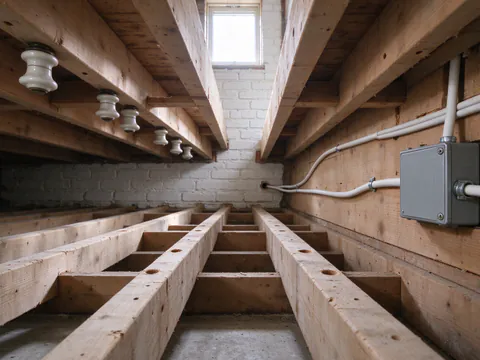
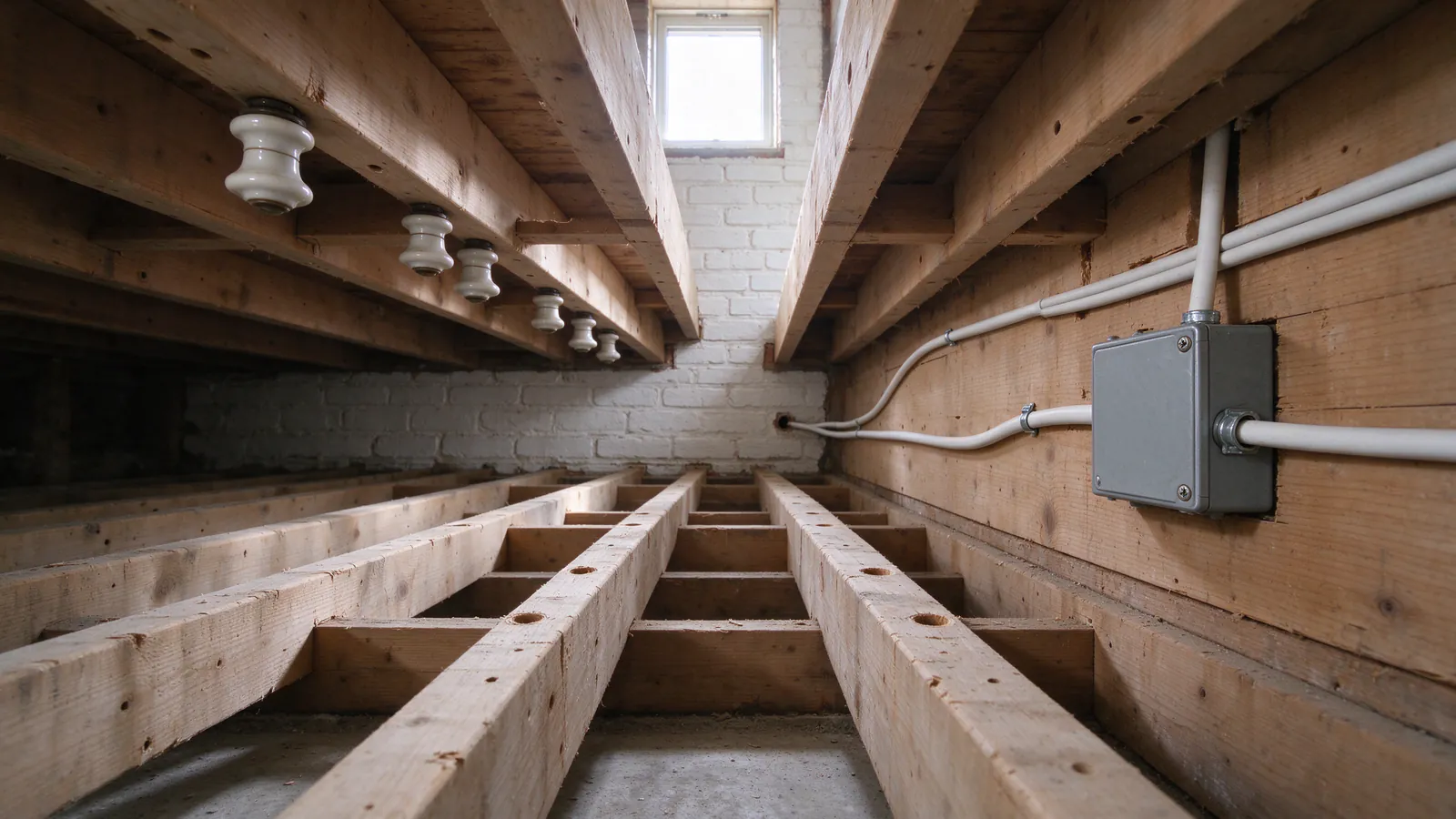
A partial replacement swaps out selected knob and tube circuits and leaves others in service; a full replacement retires every active knob and tube circuit in the house. Partial work makes sense when a circuit map shows a small, clearly bounded remainder. Full replacement makes sense when old circuits are widespread, mixed with newer wiring, or an insurer wants none left.
Philly Knob & Tube offers both kinds of project in Philadelphia, with licensed electrical contractors performing the work under permit. What follows is the decision itself: what each scope really covers, how the boundary between them is drawn, and the consequences of each choice for insurance, future work and cost.
What each option actually replaces
Full replacement means every branch circuit that still runs on knob and tube is replaced with modern cable from the panel to the last device, and the old conductors on those circuits are disconnected at both ends. It does not necessarily mean every outlet in the house is new: circuits that were already rewired in a past renovation can stay if they are sound and not spliced into old wiring. The whole-home rewiring service describes that scope.
Partial replacement means a defined set of circuits is replaced and the rest stays. Typical reasons are a kitchen or bath renovation that opens the walls in one area, a single circuit with a known defect, an attic where old runs conflict with planned insulation, or a budget that requires phases. The partial replacement service covers how those projects are scoped.
Repair is a third option that is often confused with partial replacement. It means fixing a specific fault, such as a failed splice or an oversized fuse, while keeping the original conductors in use. Repair addresses a defect; it does not reduce the amount of knob and tube in service.
Neither replacement option automatically includes a new panel, a service upgrade, plaster restoration or painting. Those are separate line items, and a panel upgrade does not replace branch wiring.
How circuit mapping changes the decision
The choice between partial and full cannot be made well until someone knows how many circuits are still knob and tube and how they connect. A circuit map is the record that answers that: each circuit identified at the panel, the rooms and devices it feeds, and whether it is original, modern or mixed.
Three findings tend to settle the question:
- A small, isolated remainder. If the map shows two or three old circuits feeding rooms that are easy to reach, and the rest of the house was properly rewired, partial replacement may simply finish a job someone else started.
- Mixed circuits. If modern cable has been spliced into old runs in the attic or walls, rooms that look rewired may still depend on original conductors. A partial job that replaces only the obviously old circuits can leave those hidden dependencies in place. The guide to mixed wiring explains why those splices matter.
- Shared or crossed neutrals. Older circuits sometimes share a neutral or have been cross-connected during earlier changes. Replacing one without the other can break both. The shared neutrals guide covers why these need to be found first.
The map comes from a knob and tube inspection, and it is worth getting before pricing either option. A quote for “partial” without a map behind it is a guess about where the boundary sits.
When remaining knob and tube still matters
Leaving some circuits in service is not automatically wrong. Knob and tube in good condition, carrying modest loads, uncovered and unmodified, is not the same risk as old wiring buried in insulation or loaded with modern appliances. The guide on whether knob and tube is dangerous explains how condition changes the picture.
The remainder starts to matter when any of these apply:
- It sits where you plan to insulate. Knob and tube was designed to shed heat into open air. If attic or wall insulation is part of your plans, the circuits in those spaces need to be dealt with first. See the insulation guide.
- It feeds rooms with growing loads. A bedroom that becomes a home office with a space heater, or a back room that becomes a laundry, asks more of a circuit than it was designed for. The appliance loads guide covers that mismatch.
- It will be harder to reach later. If new drywall, finished ceilings or restored plaster are going in over the old runs, replacing them now costs far less than reopening finished surfaces later.
- Nobody wrote down where it is. A remainder that is not documented is the one that surprises the next electrician, inspector or buyer.
The honest version of a partial job states clearly, in writing, which circuits remain knob and tube. A partial job described as “knob and tube removed” when some remains is a problem waiting for the next sale.
Insurance and inspection implications
Insurers decide individually, and their questions vary. Some ask whether the home has any knob and tube, some whether any is active, some whether it has been inspected. Homeowners report difficulty keeping or obtaining coverage once active knob and tube is disclosed, which is why the insurer’s exact wording matters before the scope is chosen.
If the carrier wants no active knob and tube, a partial job does not satisfy that requirement, however well it is done. If the carrier wants an electrician’s evaluation of the remaining wiring, a partial job plus a documented circuit list may be enough. Ask for the requirement in writing, then let it set the boundary. The homeowners insurance guide and the guide on insurance deadlines cover that conversation in detail.
On the permit side, the difference is size, not kind. Partial and full replacement both need an L&I electrical permit and third-party inspection in Philadelphia; the permit guide walks through it.
For buyers and sellers, partial replacement creates a disclosure question: the remaining circuits are still knob and tube. The buyer’s guide covers how that tends to come up in a transaction.
Where repair still fits
Repair and replacement answer different questions. Repair asks whether a specific defect can be corrected so a circuit is serviceable again. Replacement asks whether the circuit should stay in service at all. Both can be right in the same house.
A repair is a reasonable step when the problem is isolated and understood: a single splice in a basement that was taped instead of properly made, a fuse larger than the old conductor can safely carry, a short section damaged by a past plumbing job. Correcting those faults lowers the immediate risk while a longer plan is worked out. It also makes sense as a holding measure when a house is about to be renovated and the circuits will be replaced once the walls are open anyway.
Repair stops making sense when the defects are spread out rather than isolated. If one splice is bad, the electrician will ask how many others were made the same way. If insulation is crumbling where the conductor is exposed, the same age and heat history applies to the parts inside the walls. At that point each repair buys time on one spot while the rest of the circuit carries on aging, and the money spent on repairs does not reduce the eventual replacement. The signs guide covers which symptoms point to an isolated fault and which suggest a wider problem.
Comparing cost and disruption
Cost tracks the number of circuits, the access and the finishes, more than the label on the job.
| Factor | Partial replacement | Full replacement |
|---|---|---|
| Budgeting range | $2,000 to $8,000 for a few circuits (national range, not a verified Philadelphia figure) | $9,000 to $25,000 for a substantial whole-home job in a Philadelphia house (planning range) |
| What sets the price | Which circuits, how reachable they are, whether boundaries need new junctions | Total active circuits, stories, plaster, panel capacity, restoration |
| Wall openings | Limited to the circuits being replaced | Spread through the house, planned around access paths |
| Permit and inspection | Required; smaller scope, smaller fee | Required; larger scope |
| Knob and tube left in service | Yes, documented | None on the replaced circuits |
Neither range is a quote from Philly Knob & Tube. The Philadelphia range covers replacing the active knob and tube branch circuits; plaster restoration, painting, panel or service work and other trades may sit outside it, and difficult access, larger buildings or extensive restoration can push a project above it. The national partial range is broader context for small jobs, not a local verified figure. The Philadelphia cost guide explains what moves a number within those ranges, and the cost estimator lets you try your own house’s inputs.
Disruption follows the same logic. A partial job keeps the work, the dust and the power interruptions confined to the affected rooms. A full job in an occupied house is sequenced room by room, with circuits off in stages. Phasing spreads the disruption out but repeats it: each phase brings its own setup, permit, inspection and patching.
A practical way to decide
Start with the circuit map and the insurer’s written requirement. If the map shows a small, isolated remainder and the insurer does not require full removal, a documented partial job is a reasonable choice. If the old circuits are widespread, mixed with newer wiring, or in places you are about to close up or insulate, full replacement often avoids paying for the same access twice. When you have a map or an insurer letter in hand, the quote comparison guide helps you hold two proposals side by side, and the contact page is where to send the details.