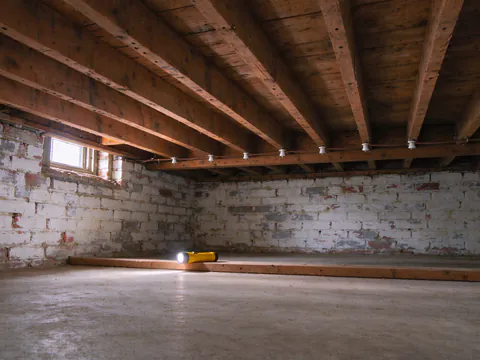
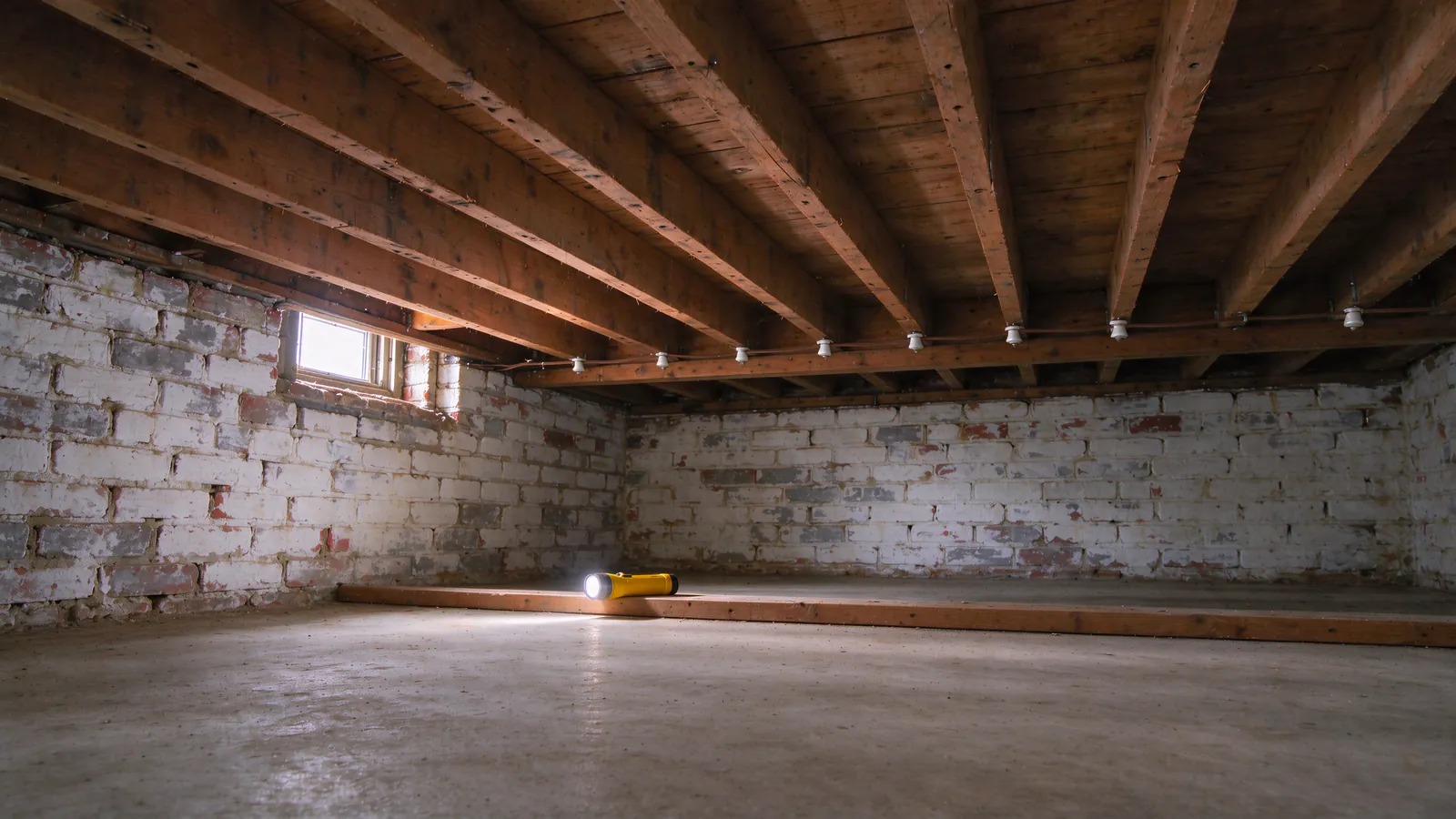
You cannot tell active from abandoned knob-and-tube by looking at it. Active means at least one conductor still carries current; abandoned means every conductor is disconnected at both ends and cannot be re-energized. Live and dead runs share the same knobs, the same braid and the same dust, so the answer comes from circuit isolation and testing. Philly Knob & Tube coordinates that circuit-by-circuit verification across Philadelphia, carried out by licensed electrical contractors, as the first step before any replacement scope is written.
What Active and Abandoned Mean
The two words get used loosely, so it helps to be exact.
Active knob-and-tube is energized. It may be an entire original circuit, or only a short stretch between the panel and a later splice, but if current flows through any old conductor, that part of the system is active.
Abandoned knob-and-tube is disconnected from every source of power. Not merely unused, and not just switched off: physically disconnected at the point where it once received power and at its far end, so no later splice, no forgotten tap and no breaker being turned back on can make it live again.
Two other states sit between those. A partial system is a house where some circuits were replaced and others still run on original wiring. A mixed system is one where old and new wiring are joined on the same circuit, so a modern outlet depends on knob-and-tube upstream of it; the mixed wiring guide is devoted to that case. A single Philadelphia house can contain all four conditions on different floors.
The distinction matters because the consequences differ. Active wiring carries the heat, insulation-contact and grounding questions of the original system. Truly abandoned wiring carries none of them electrically, though it can still confuse the next electrician, the next home inspector and the next insurance questionnaire if nobody documents it.
Why Visual Clues Are Not Enough
Homeowners and inspectors reach for the same clues, and each one fails in a predictable way.
Cut ends. A conductor with a snipped, taped end hanging in the basement looks dead. But wiring was often cut at the convenient end. The panel end of the same run may still be connected, and the cut was simply where someone stopped removing it.
Dust and cobwebs. Old wiring collects dust whether it carries current or not. Neglect is not disconnection.
Panel labels. A breaker labeled “old wiring, off” or a fuse slot left empty tells you what someone intended at some point. Labels are frequently wrong after decades of changes, and a run may be fed from a different circuit than the label suggests.
New devices in the room. A remodeled bedroom with new outlets may still be fed through knob-and-tube in the wall or attic above it. New faces on the wall are not evidence about the conductors behind them, which is the same trap described in the guide to three-prong outlets on ungrounded wiring.
A non-contact tester. These pens respond to electric fields and give both false positives and false negatives on old open wiring. Using one also means reaching toward conductors with brittle insulation. Do not do it.
The visual identification guide explains how to recognize the system from a distance. Recognizing it is where the homeowner’s part ends, and even recognition can be wrong when later cloth-covered cable sits beside the original runs, as the knob-and-tube vs cloth wiring guide explains.
Professional Isolation and Verification
Establishing status is methodical work, and it is the core of a knob-and-tube inspection. The details vary by house, but a sound process has recognizable parts.
Map circuits from the panel outward. The electrician turns off one breaker or removes one fuse at a time and records which lights, outlets and fixed appliances lose power. That gives a first picture of which rooms each circuit serves.
Find the old conductors on each circuit. In accessible basements and attics, the electrician traces from the panel to see where each circuit’s wiring changes type. A circuit tracer (a transmitter on the circuit and a receiver along the route) helps follow conductors that disappear into walls. A borescope through an existing opening can sometimes show a cavity without cutting plaster.
Measure, not guess. With the circuit identified, voltage is verified with a meter at points along the run, and the electrician checks that turning off the circuit actually de-energizes the old conductors. Old systems sometimes feed one run from two directions, or share a neutral between circuits, which means a run can stay live with its own breaker off. The shared neutrals guide explains why that complicates testing.
Disconnect at both ends. To turn active wiring into abandoned wiring, the conductors are disconnected at the source (the panel or the splice that feeds them) and at the last device or junction they reach. Accessible loose ends are cut back, and where practical the dead run is removed from basement and attic framing or tagged so it cannot be mistaken later.
Re-verify. After the circuit is restored, the electrician confirms the old conductors read dead and that the replacement wiring serves everything the old run used to feed. An outlet left with no power is often the clue that a dead run was secretly carrying a second room.
In Philadelphia, disconnecting and replacing branch wiring is electrical work that requires a licensed electrical contractor and an electrical permit from the Department of Licenses and Inspections. Inspections are performed by a licensed third-party electrical inspection agency hired by the owner or the owner’s agent.
Documentation Before Insulation or Renovation
The phrase “the knob-and-tube is abandoned” is only as good as the paper behind it. Three readers in particular will want proof.
An insulation contractor needs to know because the 2020 National Electrical Code, the edition Philadelphia enforces, does not permit concealed knob-and-tube in hollow spaces where loose, rolled or foamed-in-place insulation envelops the conductors. Dead conductors raise no such issue. The knob-and-tube and insulation guide covers the attic decision in more depth.
A renovation crew opening a wall needs to know whether the old wiring in the cavity is live before anyone cuts it.
An insurer or buyer may ask whether active knob-and-tube remains. Homeowners report that carriers ask the question in different ways, so request the exact requirement in writing and have the electrician respond to it directly. The removal and insurance letter guide explains what such a letter usually needs.
A useful written finding should state:
- which circuits were tested, identified by panel position and the rooms they serve
- which old runs were found active, which were found abandoned, and how that was established (isolated at the panel, verified with testing at the far end)
- where conductors were disconnected and at which end or ends
- which areas could not be reached, such as closed walls, finished ceilings or a floored attic, and what that leaves uncertain
- the licensed contractor’s name and license, the date, and the permit number if work was performed
“Abandoned” on a page that skips the method and the unreached areas is an opinion, not a finding.
Status is also a snapshot. A run documented as dead stays dead only if nobody reconnects it, and old houses attract informal repairs. A handyman adding a ceiling light can tap the nearest conductor in the attic without knowing it was disconnected for a reason, or worse, reconnect a long-dead run to a live circuit and bring brittle wiring back into service. Two habits reduce that risk. Keep the circuit map with the house records and hand it to anyone doing electrical work. And where old conductors are left in accessible spaces, ask that the ends be cut back far enough that they cannot be casually reconnected, and that the run be labeled as disconnected. If a later electrician finds the label and the map agree, the next project starts from evidence rather than from another round of tracing.
When Removal Is Part of the Scope
Disconnecting old wiring and pulling it out are separate jobs. Electrically, a run that is verified dead and disconnected at both ends poses no circuit hazard, and old conductors inside finished plaster walls are commonly left where they are. Removing them would mean opening walls with no electrical gain.
Physical removal makes sense where the wiring is easy to reach and leaving it would cause confusion or get in the way: exposed runs on basement joists, attic sections before new insulation, or cavities already opened for renovation. Removing accessible runs also makes the next inspection simpler, because anyone looking will see only one wiring system.
The knob-and-tube removal service page covers that work, including how it relates to replacing the circuits that the old wiring used to feed. If the inspection shows several active circuits, the next decision is how much to replace, which the partial vs full replacement guide lays out.
What to Do Next
If you only need to know whether old wiring in an attic or basement is live, the inspection and circuit map are the answer, and the inspection checklist shows what that visit should produce. Collect what you already have first: the home inspection report, any electrical permit history, and notes on renovations or insulation work. Then request an estimate and say whether you need the finding for insulation, a renovation, an insurer or a sale, because the purpose shapes how the results should be written up. For background on the system itself, the knob-and-tube basics guide and the full guide library are good places to continue.