No. A three-prong outlet only proves the receptacle has a ground slot. Original knob-and-tube circuits have two conductors and no equipment ground, so a three-prong receptacle on one is either legally labeled and GFCI-protected, connected to nothing, or falsely jumpered to the neutral. Only tracing by a licensed electrician shows which.
Philly Knob & Tube arranges knob-and-tube replacement throughout Philadelphia, with licensed electrical contractors running new grounded circuits where the old two-wire ones come out. This page explains what a grounding conductor does, what the 2020 National Electrical Code allows when an ungrounded receptacle is replaced, and why some common shortcuts leave a house worse off. It describes what a licensed electrician may install; it is not a set of instructions.
Why a Three-Prong Face Does Not Prove Grounding
Hardware stores sell three-prong receptacles for a few dollars, and over decades plenty of them went into two-wire boxes. Homeowners report buying houses where every outlet had been upgraded to three slots by a seller or flipper and then finding, at the home inspection, that the ground pins went nowhere. A three-prong receptacle installed on a two-wire circuit with nothing connected to its green screw is called an open ground. It looks modern and works for ordinary plugs, but the ground pin does not do its job.
Worse is the bootleg ground, where a short jumper links the receptacle’s ground terminal to its neutral terminal. A plug-in tester reads that outlet as correctly wired, because voltage appears between hot and ground. That false reading is the reason the shortcut is popular and also why it is hard to spot. Both conditions look identical from the room, and neither appears in photographs. The photo identification guide explains what visible clues can and cannot tell you.
What K&T Branch Circuits Typically Lack
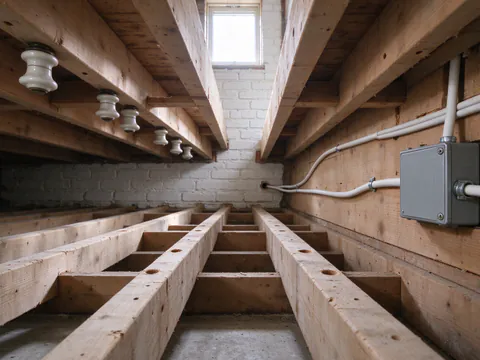
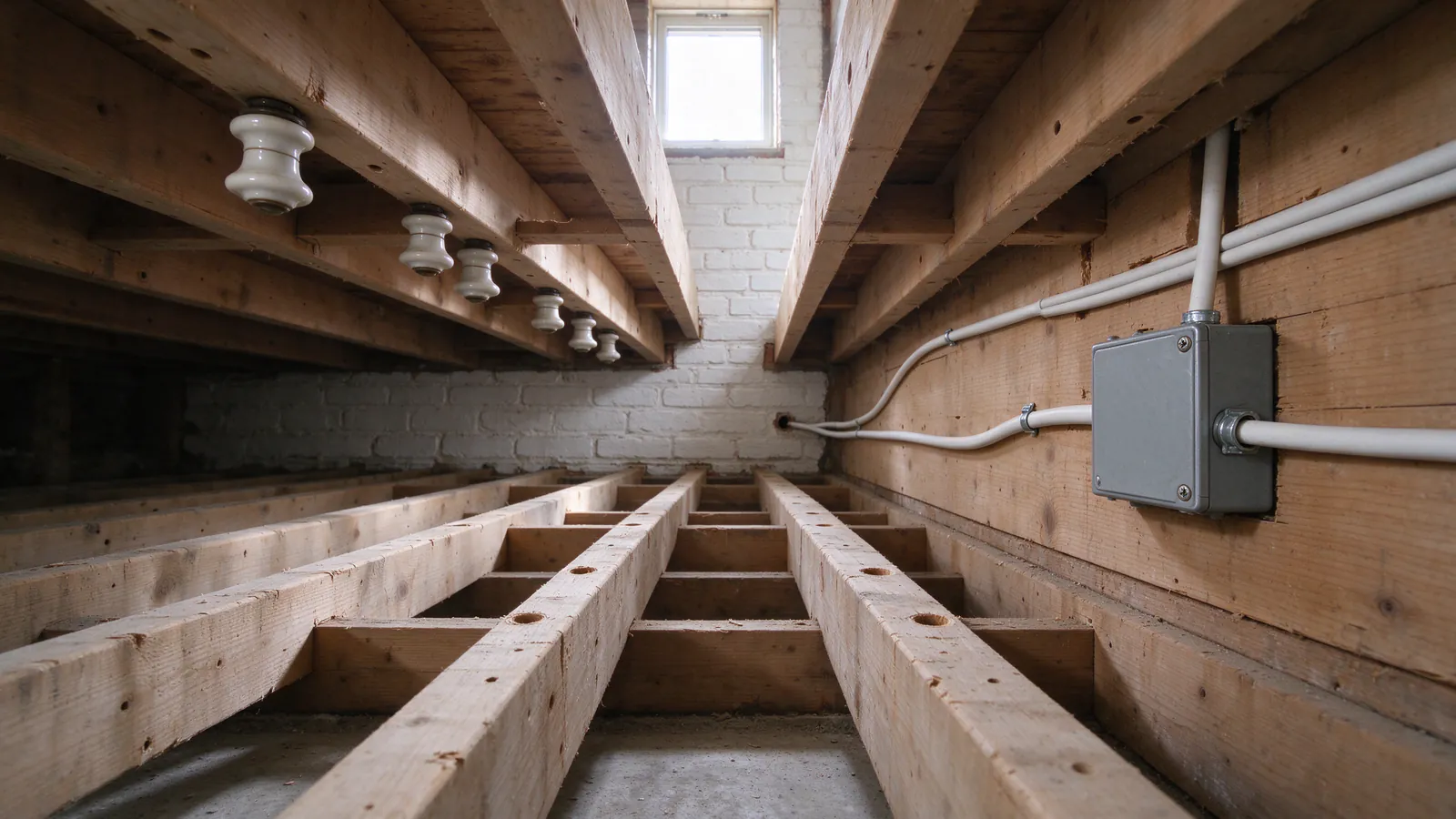
Knob-and-tube branch circuits run a hot conductor and a neutral conductor. Both carry current in normal operation. There is no third conductor whose only job is safety, because the requirement to ground general-purpose receptacles in homes came after the method fell out of use.
An equipment grounding conductor stays idle until something goes wrong. If a damaged cord or failed component lets the hot conductor touch the metal body of a lamp, a toaster or a washing machine, the ground conductor gives that fault current a low-resistance path back to the panel. The rush of current trips the breaker or blows the fuse almost instantly, so the metal body does not stay energized. Without that path, the appliance case can sit at line voltage until a person touches it and something grounded at the same moment, such as a faucet, a radiator or a damp basement floor.
Many old devices also sit in boxes that are not bonded to anything, and some knob-and-tube outlets have no box at all, just a device mounted to lath. Grounding is one of the conditions that makes old wiring a concern; the others, including insulation age and later splices, are covered in the guide on whether knob-and-tube wiring is dangerous.
Where the Missing Ground Matters Most
Not every plug needs a ground. Many lamps, phone chargers, televisions and power tools are double-insulated, built so that no exposed metal can become energized, and they come with two-prong plugs for that reason. The third prong exists for equipment with metal housings or internal surge circuitry: refrigerators, washing machines, microwaves, toasters, window air conditioners, many computers and some kitchen appliances.
Location matters as much as the appliance. A fault is most dangerous where a person is likely to be touching something grounded at the same time: a kitchen near the sink, a bathroom, a laundry corner by the water heater, or a basement with a concrete floor. In many Philadelphia rowhouses the basement holds the washer, the utility sink and the oldest visible wiring in the house, which makes it a sensible place to start when deciding which ungrounded circuits to address first. The inspection checklist includes grounding among the items an electrician reviews, and the cloth wiring comparison explains why some later two-wire cable lacks a ground for the same reason.
The Permitted Options for Ungrounded Receptacles
Philadelphia enforces the 2020 National Electrical Code. Its rules for replacing a receptacle where no ground is available, in section 406.4(D), give a licensed electrician these choices.
| Option | What is installed | Required marking | What it provides |
|---|---|---|---|
| Like for like | A two-prong, non-grounding receptacle | None | Honest about the circuit; three-prong plugs do not fit |
| GFCI-type receptacle | A GFCI receptacle in place of the old device | “No Equipment Ground” | Shock protection at that outlet and any downstream outlets it feeds |
| GFCI-protected three-prong | A standard three-prong receptacle supplied through a GFCI upstream | “GFCI Protected” and “No Equipment Ground” | Shock protection; three-prong plugs fit, still no ground path |
| Add a ground | A grounding-type receptacle with a separate equipment grounding conductor run to a point the code accepts | None | A true ground at that outlet |
The marking matters. It tells the next owner, inspector or electrician that the third slot is not connected to a ground, so nobody plugs in equipment that depends on one believing it is protected. The code also forbids running a ground conductor from a GFCI receptacle on to downstream outlets as if the GFCI created one.
Adding a ground to an existing circuit is permitted only to specific connection points, such as the grounding terminal in the panel where the circuit originates or certain parts of the grounding electrode system. A wire clamped to the nearest water pipe is not automatically one of them. On knob-and-tube, running a separate ground beside conductors that are a century old also means working around brittle insulation along the route, which is why it is rarely chosen there.
Replacement receptacles must also meet other current rules: tamper-resistant devices in dwellings, and in certain rooms arc-fault protection, described in the AFCI vs GFCI guide.
Why Cheater Plugs and Bootleg Grounds Are Dangerous
A cheater plug is the three-to-two adapter with a small tab or pigtail. The tab was meant to be fastened under a cover-plate screw in a grounded metal box. In a house with knob-and-tube, that box is usually not grounded, so the tab connects to nothing. The adapter then simply lets a three-prong appliance plug into a two-wire outlet while appearing to be accounted for.
The bootleg ground is the more dangerous shortcut because it puts the neutral conductor onto the appliance’s metal body. In normal operation the neutral carries the circuit’s returning current, so the case now sits on a current-carrying conductor. If the neutral opens anywhere upstream, at a loose splice in an attic, a failed terminal or a damaged knob-and-tube run, the full line voltage can appear on that metal case through the appliance’s own load. If the hot and neutral happen to be reversed at the receptacle, the case is energized from the start. Old circuits, with their aged splices and occasionally reversed polarity, are exactly where those conditions occur. A jumper also makes downstream ground-fault protection misbehave.
Buyers meet this most often. A house that has been cosmetically refreshed for sale can have new three-prong receptacles and fresh cover plates on circuits that are otherwise original. Homeowners report learning about it only after closing, when a surge protector’s ground light stayed dark or a new GFCI kept tripping. The guide to buying a house with knob-and-tube covers how to get an electrician’s view during the inspection period.
If you suspect either condition, the remedy is not to rewire the outlet yourself. Note which outlets have three slots in rooms where the wiring is otherwise original, and include them in a knob-and-tube inspection.
GFCI, AFCI and Grounding Are Different
These three things are often lumped together. A GFCI detects current leaking out of the circuit and cuts power, protecting people, without needing a ground. An AFCI detects the electrical signature of arcing, aimed at fire. A grounding conductor gives fault current a path so the overcurrent device trips and metal parts stay at a safe potential. Having one does not provide the others. The AFCI vs GFCI guide explains where each is required when circuits are worked on and why old shared neutrals can make them trip.
When Replacement Is the Better Decision
A labeled GFCI is a legitimate, code-recognized improvement for a sound circuit, and in a house with only one or two remaining ungrounded circuits it can be a reasonable step while other work is planned. It stops being the right answer when the circuit itself is the problem.
If inspection finds brittle insulation, overfusing, later splices or knob-and-tube buried in insulation, adding a GFCI leaves all of those in place. If you need grounded outlets for a home office, a refrigerator or electronics, a GFCI does not supply the ground. If an insurer or buyer is asking about knob-and-tube, labeled GFCI outlets do not change whether the wiring is still active, a distinction the active vs abandoned guide explains.
Replacing the circuit solves grounding as a by-product. New cable carries an equipment grounding conductor to every box, so every receptacle on it is grounded without labels or workarounds. Where only a few circuits remain, partial knob-and-tube replacement targets them; the guide to what replaces knob-and-tube wiring describes the new cable, and the Philadelphia cost guide explains what drives the budget. To find out which of your outlets are grounded and which only look it, request an inspection.