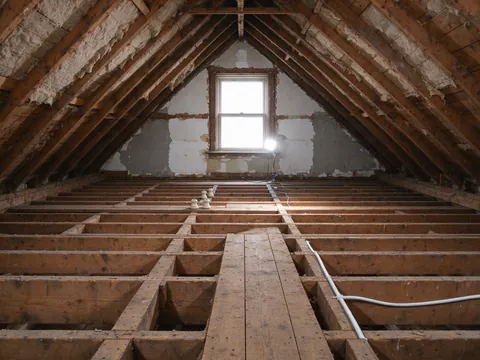
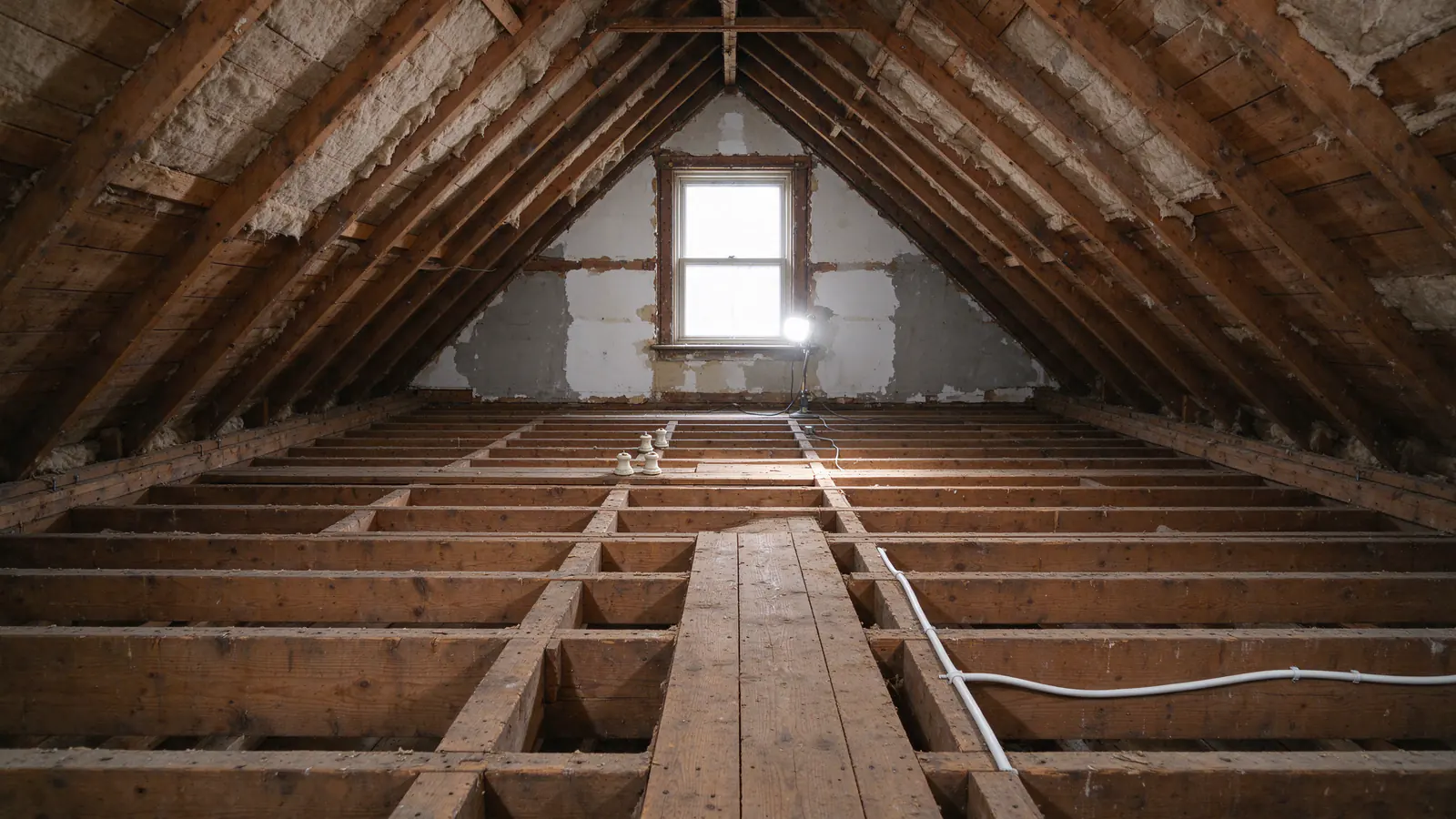
Active knob and tube should not be buried in insulation without a licensed electrician’s evaluation first. The system relies on open air around separated conductors to shed heat, and the National Electrical Code does not permit concealed knob and tube in wall, ceiling or attic cavities where insulation envelops the conductors. Plan the wiring before any insulation upgrade.
Philly Knob & Tube arranges knob and tube replacement in Philadelphia attics, walls and basements through licensed electrical contractors. This guide covers the technical conflict between old wiring and insulation: how the conductors were meant to cool, why insulation changes that, what the code says, what an attic evaluation should establish and why the electrical work usually comes before the energy work.
How legacy conductors shed heat
Every conductor carrying current produces heat. Modern cable handles that with insulation rated for higher temperatures and with conductor sizes and protection chosen for the conditions it will be installed in, including insulated walls.
Knob and tube solved the problem differently. The hot and neutral conductors run separately, often several inches apart, held off the framing by porcelain knobs and passed through joists inside porcelain tubes. Each conductor is wrapped in rubber insulation and a cloth braid. Air moves around each wire on every side, and the heat it produces dissipates into the open cavity. The cornerstone guide explains the system’s layout.
That design worked for the loads of its time: a few lights and some small appliances. It assumes two things that are often no longer true: that the conductors are surrounded by air, and that the load on them stays modest.
Why insulation contact changes the risk
When loose-fill, batt or foam insulation surrounds a knob and tube conductor, the air that carried heat away is replaced by material designed to stop heat from moving. The conductor runs warmer under the same load. Several things follow:
- Insulation ages faster. Rubber insulation that is already decades old becomes more brittle when it runs warm, and brittle insulation cracks and flakes, especially where the conductor is disturbed.
- Splices get hotter. Knob and tube splices were typically soldered and taped in open air. Buried in insulation, a splice that was marginal becomes a hot spot. The splices guide covers why these connections matter.
- Oversized protection removes the safety margin. Where a fuse or breaker larger than the conductor’s rating has been fitted, the overcurrent device may not open before the wire overheats. Insulation makes that worse.
- Problems become invisible. A damaged conductor in open air can be seen during an inspection. The same conductor under a foot of blown-in fill cannot.
None of this guarantees a fire, and the risk depends on load, condition, fusing and the type of insulation. That is why the question is evaluated per house rather than answered with a rule of thumb. The guide on whether knob and tube is dangerous covers the broader picture.
What the electrical code says
Philadelphia enforces the 2020 National Electrical Code. Article 394 of the NEC covers concealed knob and tube wiring, and section 394.12 lists the places it is not permitted. One of them is hollow spaces of walls, ceilings and attics where those spaces are insulated by loose, rolled or foamed-in-place insulating material that envelops the conductors.
Two points help read that correctly:
- The article governs installations, not history. Article 394 permits new concealed knob and tube only for extensions of existing installations, or elsewhere by special permission. It does not by itself make every existing run illegal. But adding insulation that envelops existing conductors creates the very condition 394.12 describes.
- Interpretation belongs to the professionals on the job. How the rule applies to a specific attic, and whether partial contact counts as enveloping, is for the licensed electrician and the inspection agency to judge. Some jurisdictions have adopted local amendments allowing insulation over knob and tube under strict conditions; do not assume any such allowance applies in Philadelphia without the electrician confirming it.
The blog post on Philadelphia’s electrical code explains the difference between existing conditions and new work in more depth.
Blown-in retrofits and weatherization programs
Most insulation conflicts start with an energy upgrade. Blown-in cellulose or fiberglass is a common way to insulate an attic floor or closed wall cavities in an older house, because it fills irregular spaces without opening walls. In a house with active knob and tube in those spaces, that is exactly the problem.
Some weatherization and energy-efficiency programs will not insulate over active knob and tube, and some require it to be evaluated or replaced first. Requirements vary and change, so ask the program or the insulation contractor to state its condition in writing. That requirement then sets the electrical scope, just as an insurer’s requirement might; the insurance guide covers that parallel.
The seasonal blog post on attic insulation covers the planning and timing side for homeowners preparing an energy project.
How different insulation types interact with old wiring
Not every insulation product creates the same situation, and the differences matter when deciding what to do with a space.
Loose-fill cellulose and fiberglass. Blown onto an attic floor or into closed wall cavities, loose fill flows around everything in its path, including knob and tube conductors and their splices. It is the clearest case of insulation that envelops the conductors, and it is hard to pull back later without disturbing the wiring.
Batts and rolls. Fiberglass or mineral wool batts laid between joists can sit on top of conductors or be pressed against them. Even when an installer tries to keep batts clear, old runs often cross joists at angles that make a clean gap difficult.
Spray foam. Foam expands and bonds to whatever it touches. Applied in a cavity with knob and tube, it encases the conductors completely and makes later inspection or removal very difficult.
Vermiculite. Older attics sometimes have loose, pebbly vermiculite fill already in place. Beyond the wiring question, it may contain asbestos and should not be disturbed until tested.
Air sealing raises a related point. Energy auditors often seal gaps at top plates and around ceiling penetrations before insulating, and old wiring passes through many of those same holes. Sealing around a live knob and tube conductor, or around the porcelain tube it passes through, is work to plan with the electrician rather than leave to the insulation crew.
What an attic evaluation should establish
Before insulation goes in, a licensed electrician’s evaluation of the attic or cavity should answer:
- Are the conductors active? Status is confirmed by tracing and testing from the panel, not by appearance. The active versus abandoned guide explains how.
- What circuits run through this space? In a rowhouse, the attic may carry the feeds for every top-floor room.
- Is any existing insulation already in contact? And has it caused visible heat damage?
- Are there splices or modern cable tied into old runs?
- How is each circuit protected at the panel?
- What is the access like? Height, flooring, existing fill and any suspect materials, such as vermiculite, which the asbestos guide addresses.
The answer may be that the attic runs are already dead, that only a few circuits need replacing, or that the whole top floor depends on them. The partial versus full replacement guide helps decide how far to go.
When the wiring is already buried
Some owners discover the conflict after the fact: an earlier owner insulated the attic decades ago, and the knob and tube is somewhere underneath. That situation calls for the same evaluation, with one extra difficulty. The electrician may not be able to see the runs without moving insulation, and moving it carefully is part of the work, not a homeowner chore.
The outcome generally falls into one of three cases. If the buried runs turn out to be dead at both ends, they can be documented and left. If they are active and feed rooms that can be rewired from below, new circuits can be run and the old ones disconnected without disturbing the attic much. If they are active and the attic is the only practical route, insulation is moved aside, the new wiring is installed, and the insulation is restored or replaced. Which of these applies depends on the circuit map, not on how the attic looks from the hatch.
Replacement before energy upgrades
When active knob and tube shares a space with planned insulation, the usual sequence is:
- Evaluate the wiring and map the circuits.
- Replace the affected circuits with modern cable rated for the conditions, and disconnect the old runs at both ends.
- Pass the electrical inspection.
- Then insulate.
Doing it in that order keeps the attic open while the electrician needs it, avoids paying to move fresh insulation later, and gives the insulation contractor documentation. The attic replacement service describes how that work is scoped, and the cost guide explains what moves the price.
What not to disturb yourself
If you are in the attic for any reason, look but do not touch. Do not move insulation off or onto old wiring, pull on conductors to see where they go, step on runs, or try to test whether they are live. Old insulation on the conductors can crumble when handled, and an apparently dead run can still be energized. If you see scorched wood, melted or charred insulation, or smell burning, stop using the related circuits and call a licensed electrician.
When you are planning insulation or have been told the attic needs work, start with a knob and tube inspection or send the details through the contact page.