
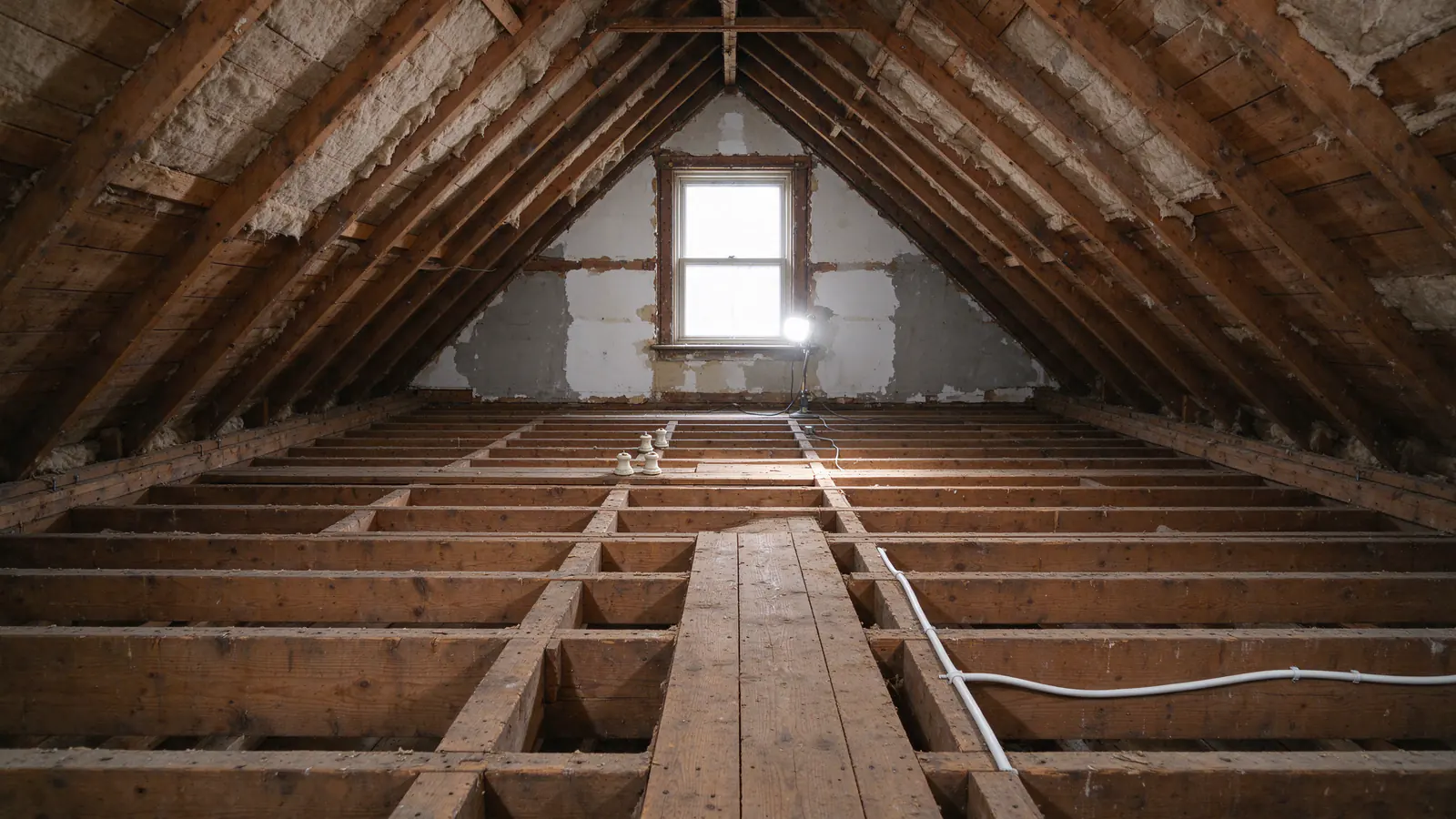
Planning attic insulation when knob-and-tube wiring is present comes down to order: get the attic circuits traced by a licensed electrician before the insulation crew is scheduled, replace any live runs the insulation would cover, and only then insulate. Doing it the other way round tends to stop the job halfway or bury wiring that was never meant to be covered.
The timing problem has a pattern. Attic insulation and air sealing are projects people decide on when the weather makes the house uncomfortable: a first cold snap that sends the heating bill up, or a stretch of summer heat when the top floor of a Philadelphia rowhouse will not cool down. An energy audit or a weatherization program recommends more insulation, a contractor is booked for a few weeks out, and the attic hatch gets opened by someone who has not looked up there in years. That is the moment the porcelain knobs appear.
Why the Attic Is Where the Question Surfaces
Most knob-and-tube in a finished house is hidden in walls and ceilings. The attic is the exception. Runs that cross the joists on knobs, or pass through porcelain tubes into the top plates, are often in plain view there, and an insulation estimator who has to measure the space is likely to see them before anyone else does.
What they see does not tell them much. A pair of cloth-covered conductors on knobs may belong to a circuit that was disconnected when the house was partly rewired, or it may still feed half the lights on the top floor. The guide to knob-and-tube photos and identification shows what the system looks like, and the guide to active and abandoned knob-and-tube explains why its appearance cannot settle whether it is live. An insulation contractor may decline to cover wiring nobody can vouch for, which is reasonable, and the project stalls until someone qualified answers the question.
What to Check Before an Attic Upgrade
A little homework before booking the insulation saves a stalled job. None of it involves touching the wiring.
Look at what you already have. A home inspection report from when you bought the house may mention knob-and-tube or “older wiring” in the attic or basement. A previous electrician’s invoice may list circuits that were replaced. An energy audit report sometimes includes attic photographs; look at them for porcelain knobs, single conductors running apart from each other, or wires lying on top of existing insulation. If you can see the attic from the hatch with a flashlight, photographs from there are useful too. Do not climb across joists to reach wiring, and do not move insulation that is lying on it.
Then read the insulation proposal. Note the material, the depth, whether air sealing at the top plates and around fixtures is included, and whether the contract says anything about old wiring. A proposal may exclude areas with knob-and-tube or make the job conditional on an electrician’s sign-off. Knowing that up front tells you the electrical work is not optional for this project.
Check whether the proposal goes beyond the attic. Weatherization packages sometimes add dense-pack insulation blown into exterior wall cavities, and that is where knob-and-tube is hardest to see. A wall that looks finished and ordinary from the room can still carry original runs between the studs, so a wall-insulation line item is a reason to have the walls considered in the same electrical trace, not just the attic.
Finally, note what lives in the ceiling below the attic. Recessed fixtures, ceiling fans and older light boxes all sit where insulation will go, and an electrician will need to know about them.
Where Wiring Findings Change the Sequence
Once a licensed electrician has traced the attic runs, the findings fall into a few patterns, and each one points to a different order of work.
| What the trace finds | What usually happens next |
|---|---|
| No live knob-and-tube in the attic; old runs are disconnected | The electrician documents it, accessible dead runs may be removed, and insulation proceeds |
| A few live attic runs serving top-floor lights and outlets | Those circuits are replaced, the rough-in is inspected, then the attic is insulated |
| Live knob-and-tube in the attic and throughout the floors below | A whole-house plan is considered before the attic is closed, so ceilings are not opened twice |
| Later cable spliced into old runs without boxes | The splices are corrected as part of the attic scope before anything is covered |
The middle rows are where the calendar moves. Replacing attic circuits means a permit through L&I, the work itself, and a rough-in inspection by a licensed third-party inspection agency before the area is covered. The insulation date has to wait for that inspection. The knob-and-tube replacement timeline explains what sets the length of each step, and the attic knob-and-tube replacement service page describes how the attic work itself is done.
The third row deserves a pause. If the trace shows that most of the house still runs on knob-and-tube, replacing only the attic level now and the rest later can mean opening the newly insulated attic again to route cable down to the floors below. In that case it is worth pricing a whole-home rewiring before the insulation goes in, even if you decide to phase it.
Why the conflict exists at all is a technical question with a technical answer. Knob-and-tube conductors were designed to shed heat into open air, and the 2020 National Electrical Code, which Philadelphia uses, does not allow concealed knob-and-tube in spaces where loose, rolled or foamed-in-place insulation envelops the conductors. The guide to knob-and-tube and insulation explains the mechanism and what it means for wiring that is already in place.
Who to Call and What to Ask
Two contractors are involved, and the most useful thing you can do is get them working from the same information.
Call the electrician first. Through Philly Knob & Tube, Philadelphia homeowners can arrange an attic trace and, where needed, replacement of attic circuits by licensed electrical contractors. When you call, mention that insulation is planned and roughly when, and have the insulation proposal ready. Questions worth asking the electrician:
- Which attic runs are live, which are disconnected, and which continue into the rooms below?
- If circuits need replacing, will the scope cover the whole circuit or only the attic portion?
- Will the rough-in be inspected before the insulation date, and who arranges the inspection?
- Can you give me a short written note for the insulation contractor stating what is live in the attic?
Then go back to the insulation contractor with that note. Ask whether the electrical work changes their price or their method, whether they need the attic left in a particular condition, and how they will treat any new cable and boxes. If they plan air sealing around ceiling fixtures, ask how that interacts with the fixtures the electrician installs.
For general preparation, such as clearing the area under the hatch and protecting belongings, the guide to preparing for knob-and-tube rewiring covers the household side. If you are not yet sure whether there is any knob-and-tube in the house at all, the knob-and-tube inspection service is the place to start, or try the short knob-and-tube assessment for a sense of the next step.
If Something Looks Wrong Up There
An attic visit sometimes turns up more than old wiring. Scorched wood around a knob, darkened or crumbling conductor insulation or a burning smell near the hatch are not planning issues. Stop using the circuits you suspect, keep away from the wiring, and get an electrician out before the insulation project goes any further. The guide on whether knob-and-tube is dangerous explains which conditions turn old wiring from a planning question into an urgent one.
For most homes, though, the finding is undramatic: a few runs on knobs that need a definite answer before they are covered. Get that answer first, and the insulation project can go ahead on a date that holds. When you are ready, request an estimate and mention the insulation timing so the attic trace can be planned around it.