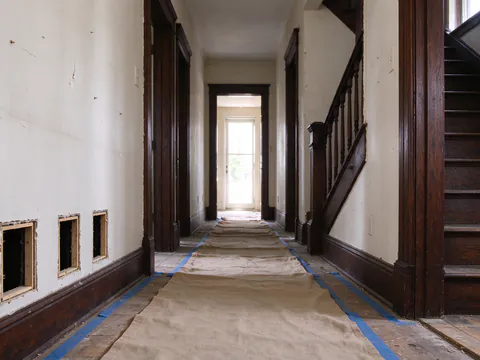
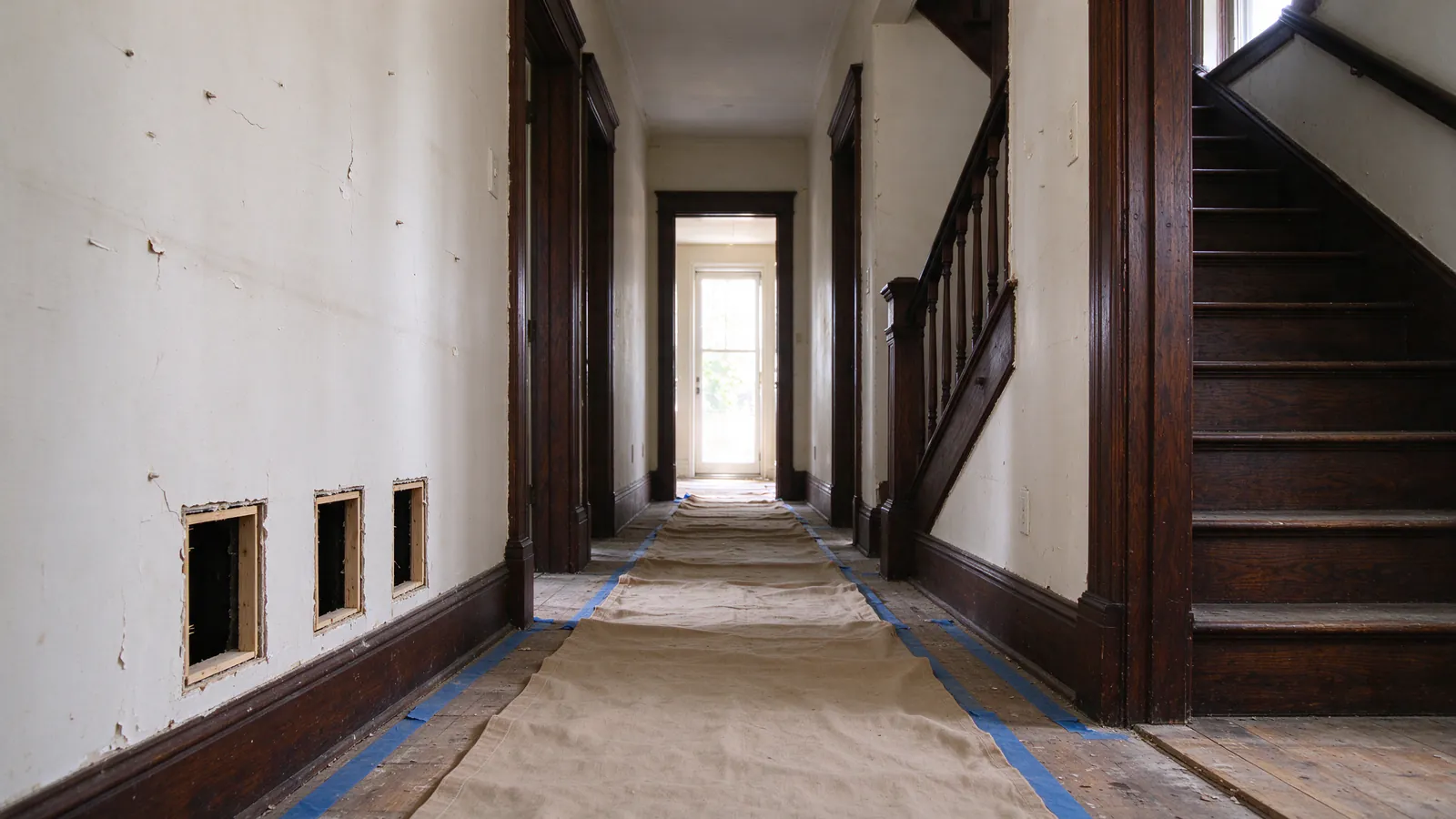
No. A panel upgrade replaces the fuse box or breaker panel, and sometimes the service feeding it, but the branch circuits running from it to outlets, switches and lights stay as they are. Original knob-and-tube circuits are usually reconnected to new breakers and keep working. Only replacing those branch conductors removes knob-and-tube.
That distinction is the core of what Philly Knob & Tube does: it plans and manages the replacement of knob-and-tube branch wiring in Philadelphia homes and small residential buildings, carried out by licensed electrical contractors, and it includes panel or service work only when a rewire needs it. This guide explains what each scope changes, why one does not imply the other, and how they fit together when both are required.
What Changing the Panel Actually Changes
Three different things are often called “the panel,” and they are worth separating.
The panelboard is the box of fuses or breakers that divides incoming power into branch circuits. Replacing it, for example swapping a screw-in fuse box for a breaker panel, is what most people mean by a panel upgrade.
The service is everything that brings power to the panelboard: the utility’s connection to the house, the service entrance conductors, the meter base and the main disconnect. A service upgrade raises its capacity, for instance from an older 60-amp service to 100 or 200 amps, and usually includes the grounding electrode system that bonds the electrical system to earth and to metal water piping.
The branch circuits are the conductors from each breaker to the outlets, switches and fixtures in the rooms. In an old house, these are where knob-and-tube lives.
A panel change makes real improvements. Breakers reset rather than requiring replacement fuses, they can be sized and labeled correctly, and a modern panel can accept arc-fault and ground-fault breakers. A service upgrade adds capacity for more circuits and heavier appliances. Neither one touches the wire inside the plaster.
Why Branch-Circuit K&T Can Remain
When an electrician replaces a panel, each existing circuit has to go somewhere. Unless a separate rewire is part of the job, the existing conductors, knob-and-tube included, are reconnected to breakers in the new panel. Done properly, each one gets a breaker sized to its wire, which corrects the oversized fuses common in old fuse boxes. That is a genuine safety gain. But every outlet on that circuit is still fed by the same century-old conductors, splices and insulation.
This is how many Philadelphia houses ended up with a modern panel and active knob-and-tube behind it. Homeowners report being told by a seller that “the electric was updated” when only the panel had been. Inspectors, insurers and buyers ask a narrower question: is any knob-and-tube still energized? A new panel does not answer it. The guide to active vs abandoned knob-and-tube explains how electricians tell which circuits are still live.
Paperwork follows the same logic. An invoice that says “replaced panel” should not be read, or presented to an insurer, as evidence of knob-and-tube replacement. A K&T replacement record names the circuits replaced and confirms the old conductors were disconnected. Insurers decide individually what they accept, so ask yours what document it wants in writing, as the homeowners insurance guide recommends.
Replacing a Fuse Box That Still Feeds Knob-and-Tube
A common question is whether a fuse box serving knob-and-tube can be swapped for breakers without touching the circuits or the feed. Often it can, as a matter of equipment. The electrician mounts a breaker panel, brings the existing service conductors into it if they are adequate, and connects each old circuit to a breaker. Several decisions sit inside that simple description, and they are why the job is not a casual one.
Each old circuit needs a breaker that matches its conductor, which frequently means a smaller rating than the fuse it replaces. A circuit that never blew its 30-amp fuse may start tripping a correctly sized 15-amp breaker the first evening the space heater runs. That is the new panel exposing a load problem the old fuse was hiding, not a defect in the panel. Old circuits that shared a neutral, or were doubled onto one fuse, have to be sorted out rather than recreated. Conductors with brittle insulation at the point they enter the old box may not survive being moved, which can force a short replacement section at the panel even when nobody planned one.
So a panel swap on a knob-and-tube house is best planned with an eye on the rewire that will follow, even if that rewire happens in phases. Choosing a panel with enough spaces and the right breaker types now avoids replacing it twice.
When Panel Compatibility Matters
Going the other direction, a knob-and-tube replacement often needs the panel to change. The electrician checks four things.
| Question | Why it matters to a rewire |
|---|---|
| Can the panel accept modern protective breakers? | Fuse boxes cannot take AFCI or GFCI breakers, and some older panels have no listed versions available |
| Are there enough spaces? | Rewired houses gain circuits: two kitchen circuits, bathroom, laundry and dedicated appliance runs |
| Is the service big enough? | A load calculation shows whether the planned circuits and appliances fit the existing service |
| What condition is the panel in? | Corrosion, overheated bus connections, double-tapped breakers or discontinued equipment push toward replacement |
The appliance loads guide explains why new circuits multiply during a rewire, and the guide to what replaces knob-and-tube wiring describes the protection those circuits carry.
Relocation is a subtler case. If a new panel goes in a different spot, existing circuits have to be extended to reach it. Under the 2020 National Electrical Code that Philadelphia enforces, extending branch circuits that serve bedrooms, living areas and similar rooms generally brings arc-fault protection requirements, with an exception for extensions of six feet or less that add no outlets or devices. The AFCI vs GFCI guide covers why old circuits do not always tolerate that protection.
When Both Happen, and in What Order
Many whole-home projects include panel work because a fuse box cannot support the new circuits. The usual sequence is to set the new panel first, sometimes beside the old equipment, so new circuits can land on proper breakers as they are pulled, and the remaining old circuits are transferred over until each is replaced. The rewiring process guide and the timeline guide show how that staging affects days without power in particular rooms.
Permits and paperwork stack accordingly. The city electrical permit from the Department of Licenses and Inspections covers the electrical scope, and its fee scales with the estimated cost of the electrical work: $25 for each $1,000, so a $15,000 electrical scope would carry a $375 permit fee in that example, plus the filing fee and surcharges. If the service itself changes, a PECO service and meter application is typically needed too, and the utility schedules disconnection and reconnection. On a property listed on the Philadelphia Register of Historic Places, a new exterior meter location or conduit on the facade may need Philadelphia Historical Commission review, while ordinary interior rewiring usually does not. The permits guide covers the city side in detail.
Budgets need the same separation. A planning range of $9,000 to $25,000 is a reasonable starting point for a substantial whole-home knob-and-tube replacement in a Philadelphia house. It is a budgeting range, not a quote from Philly Knob & Tube, and it covers replacing the active knob-and-tube branch circuits; panel or service work, plaster restoration and painting may be excluded, and difficult access or larger buildings can push a project above it. The Philadelphia replacement cost guide explains each driver.
What This K&T Specialist Offers and Excludes
Philly Knob & Tube’s service is knob-and-tube inspection and replacement. When a rewire requires a new panel, added capacity or a service change, that work is scoped with the project and performed by the licensed electrical contractor doing the rewire, so the new circuits and the equipment they land on are designed together. A stand-alone panel or service upgrade in a house without knob-and-tube is not something this site offers.
A few questions clarify any proposal that mentions both scopes:
- Which circuits, by room, will be on new wire when the job is finished, and which will remain on original wiring?
- Will the old conductors be disconnected at both ends, and will accessible runs be removed?
- Is the panel being replaced, the service, or both, and does the price include the PECO application and any meter work?
- Are plaster patching and painting included, or left to the owner?
If you are deciding between the two because someone has quoted a panel upgrade as the fix for old wiring, ask for that quote to state which branch circuits it replaces. If the answer is none, the knob-and-tube question is still open. The guide on whether knob-and-tube wiring is dangerous explains why the branch wiring is where the risk sits, and the cornerstone guide to knob-and-tube gives background on the system.
Where to Start
A knob-and-tube inspection maps the circuits and reviews the panel at the same visit, so the scope can say plainly which circuits are being replaced and whether the panel or service has to change to support them. When most circuits are original, a whole-home rewire is the usual path. Request an estimate to get that written scope.