Knob-and-tube runs single conductors through open air on porcelain knobs and tubes. BX, an early form of armored cable, bundles insulated conductors inside a flexible spiral steel jacket. They look, behave and age differently, and the armor on old BX may or may not work as a ground. Many older houses contain both. Philly Knob & Tube provides knob-and-tube assessment and replacement across Philadelphia, delivered through licensed electrical contractors, and telling these two systems apart keeps a scope from either missing old wiring or replacing sound cable without reason.
How the Two Systems Are Constructed
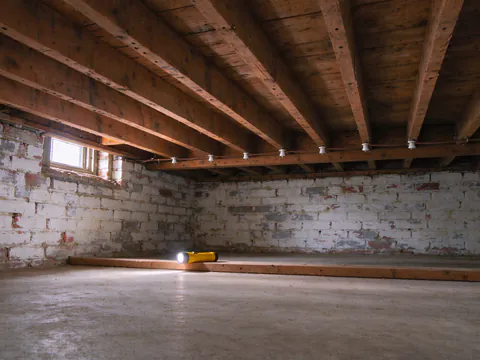
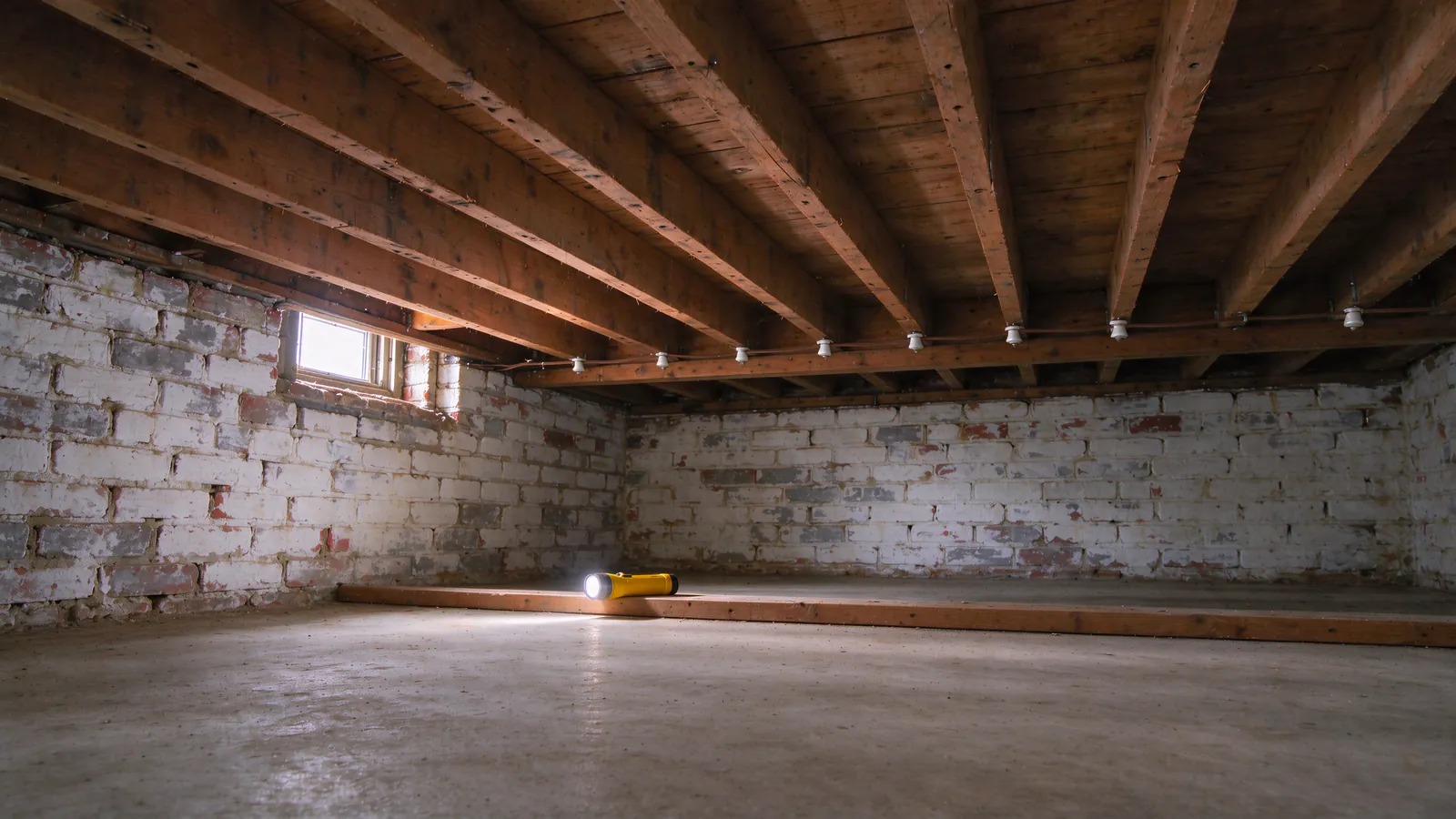
Knob-and-tube has no outer jacket at all. Each conductor is a solid copper wire coated in rubber and covered in a treated cotton braid. The hot and neutral run separately, held off the framing by porcelain knobs and passed through joists and studs inside porcelain tubes. Air around each wire carries heat away, and separation keeps the two conductors from touching if their insulation fails. Splices were soldered, taped and left in open air, and many devices sat in the plaster without a box. The guide to knob-and-tube identification walks through each part.
BX is the common trade name for early armored cable. Two or more conductors, each insulated much like knob-and-tube conductors and often wrapped in paper, are enclosed in a long strip of steel wound into interlocking spirals. The result looks like a flexible metal hose. The armor protects the conductors from nails, screws and abrasion, which is why the cable could be run in places open wiring could not, such as along the face of masonry or fished into tight spaces. Armored cable normally ends in metal boxes, where a connector clamps the armor to the box.
Later armored cable changed in two ways that matter to an electrician today. A thin metal bonding strip was added inside the armor, running the length of the cable in contact with the spiral, which greatly improves the armor’s ability to carry fault current. And a fiber or plastic anti-short bushing was inserted at each cut end to keep the sharp edge of the armor from slicing the conductor insulation. Early BX lacks both. Modern metal-clad cable goes further and includes a separate insulated grounding conductor.
| Feature | Knob-and-tube | Early BX armored cable |
|---|---|---|
| Outer covering | None; individual conductors in open air | Spiral steel armor around all conductors |
| Conductor arrangement | Hot and neutral separate, often inches apart | Conductors together inside the armor |
| Supports | Porcelain knobs and tubes | Straps or staples; clamp connectors at boxes |
| Splices | Soldered, taped, in open air | Inside metal boxes |
| Ground | None | Armor only, reliability uncertain |
| Heat shedding | Relies on surrounding air | Through the armor; less sensitive to enclosure |
Why both turn up in the same house
Houses that were first wired on knobs were often extended or partly rewired later, and armored cable was one of the materials used for that work. In some older city buildings, armored cable or metal conduit was also used from the start for certain runs. So it is plausible for a Philadelphia rowhouse to have original knob-and-tube in some circuits and BX in others, or both on the same circuit where an armored extension was spliced onto an old run. Whether a particular house has either one is established by inspection, not by its age or its block.
How to Recognize Each Without Touching Conductors
You can usually tell these systems apart from where you stand in a basement or at an attic hatch, with a flashlight. Do not touch, flex or pull any of it.
Knob-and-tube looks like two separate lines of white porcelain spools, each carrying one dark cloth-covered wire, often several inches apart. Where the wires pass through framing you see porcelain sleeves. Near fixtures the conductors may disappear into a fabric loom sleeve.
BX looks like a single grey or rust-colored metal hose with a spiral ridge, strapped to framing or running along a beam, entering metal boxes through clamp fittings. You will not see conductors at all except inside a box, which should stay closed.
A few things resemble one or the other:
- Flexible metal conduit looks almost identical to BX from a distance but is an empty raceway with conductors pulled in later. Telling them apart usually needs a look at a box end.
- Modern metal-clad cable has the same spiral look; newer armor is often brighter aluminum and may carry printed markings. Its age and construction are confirmed by the electrician.
- Rigid or thin-wall metal conduit is smooth pipe rather than spiral armor, and may contain cloth-covered single conductors inside.
- Cloth-sheathed cable is a flat fabric-covered cable, not metal, and is covered in the knob-and-tube vs cloth wiring guide.
Where you see BX leaving a box that also has knob-and-tube entering it, you are looking at a transition between systems. The guide to mixed wiring and the splice and junction box guide explain why those points deserve attention.
Grounding and Condition Are Separate Questions
People often treat these two systems as opposite ends of one scale: knob-and-tube bad, armored cable fine. That collapses two separate questions into one.
Grounding. Knob-and-tube has no equipment grounding conductor. Old BX has no separate one either; its only possible grounding path is the armor. On cable with an internal bonding strip, correctly connected at both ends, the armor can serve. On early cable without the strip, fault current has to travel the long spiral of the armor itself, where each turn touches the next with variable contact. Over a long run that path can have enough resistance to keep a breaker from tripping quickly during a fault. Rust, loose or missing connectors, painted boxes and boxes that were never bonded add further breaks. So a three-slot receptacle on BX may be grounded, poorly grounded or not grounded at all. The three-prong outlets guide explains why the face of an outlet settles nothing.
Condition. The conductors inside old BX are of the same generation as knob-and-tube conductors: rubber insulation under a cloth braid. They harden with age and heat in much the same way, and the armor does nothing to stop that. On early cable without anti-short bushings, insulation at the cut ends can also be nicked by the armor edge. Knob-and-tube, for its part, may have intact insulation in an undisturbed basement run and badly cracked insulation over a light fixture in the attic.
Insulation contact. A third difference shows up in attics and wall cavities that are about to be insulated. The 2020 National Electrical Code, which Philadelphia enforces, does not permit concealed knob-and-tube in hollow spaces where insulation envelops the conductors, because open wiring depends on free air to stay cool. Armored cable is an enclosed cable assembly, so that restriction is not written for it in the same way. That does not make every old BX run a good candidate to be buried under loose-fill: the rubber conductors inside still have a temperature limit, and a run with doubtful insulation is better dealt with before it disappears from view. The knob-and-tube and insulation guide covers the attic decision for the open wiring.
Keeping the questions separate is what avoids blanket assumptions. A BX circuit with brittle conductors can be a higher priority than a knob-and-tube run in good condition, and a BX run with a tested ground and sound insulation may reasonably stay. The opposite combinations are also possible.
What an Inspection Can Confirm
A knob-and-tube inspection that finds armored cable should report on it rather than skip past it. A licensed electrician can establish, for each circuit:
- whether it is knob-and-tube, armored cable, something else, or a combination, and where the transitions sit
- whether the armored cable has a bonding strip and anti-short bushings, seen at box ends the electrician opens
- whether the armor provides a continuous, low-resistance grounding path, by testing rather than assumption
- the condition of conductor insulation where it can be reached
- whether each breaker or fuse suits the conductors it protects
- whether an armored circuit shares its neutral with another circuit, which the shared neutrals guide explains, and how that affects adding protection covered in the AFCI vs GFCI guide
- whether any armored circuit is fed by knob-and-tube upstream, which the active vs abandoned guide explains how to verify
It cannot see the condition of conductors inside long concealed runs, so a good report names which sections were checked. With that information, a proposal can say which armored circuits are kept, which are replaced and why, instead of treating every metal-jacketed cable as either safe or obsolete. The quote comparison guide helps when two proposals draw that line differently, and the Philadelphia cost guide shows how circuit count and access affect the budget.
When armored circuits are replaced along with knob-and-tube, the new wiring is a modern grounded cable on new routes from the panel, as described in the guide to what replaces knob-and-tube.
Next Steps
If your basement or attic shows spiral-armored cable, porcelain knobs or both, photograph them from a safe position and leave everything closed. Note any outlets that have been changed to three-slot devices, and any renovation history you know. Then request an estimate for an assessment that names each wiring type circuit by circuit. For background on the older system, read what knob-and-tube wiring is, or browse the guide library.