In Philadelphia, a licensed third-party electrical inspection agency, hired by the owner or the owner’s agent, inspects knob-and-tube rewiring, not a city inspector. Rough-in work is inspected before walls are closed, and a final inspection after devices and breakers are installed closes out the electrical permit issued by the Department of Licenses and Inspections (L&I).
Philly Knob & Tube offers knob-and-tube replacement in Philadelphia and manages each project through licensed and insured electrical contractors, who hold the permits and arrange the inspections required by the City. This guide explains the inspection side of the work after the permit is issued: who inspects, what the approval establishes, what happens when corrections are needed, and what to keep. Getting the permit itself, including fees and which path a property follows, is covered in the guide to Philadelphia electrical permits for rewiring.
Who Performs the Electrical Inspection
Philadelphia’s electrical inspection model differs from what many homeowners expect. L&I issues electrical permits, and a licensed electrical contractor, with an active license, current on City taxes and with insurance on file with L&I, must perform the work. But L&I does not send its own electrical inspector to check a residential rewire. Instead, the owner, or someone acting as the owner’s agent, hires a licensed electrical inspection agency to perform all the required inspections.
The electrical contractor can take on that arrangement as the owner’s agent, selecting an agency, scheduling inspections and including the agency’s fee in the price. Nothing requires that setup, so the contract should say who engages the agency and who pays for it. If you hire the agency yourself, coordinate the inspection dates with the contractor so the work is ready when the inspector arrives.
The agency is independent of the contractor. Its inspector checks the work against the code Philadelphia applies to electrical installations, the 2020 National Electrical Code, along with local administrative requirements.
Not the same as a knob-and-tube inspection
Homeowners sometimes confuse two different visits. A knob-and-tube inspection before any work is a survey: an electrician maps which original circuits are live, notes their condition and helps define the scope. The permit inspections described here come afterward, and they check the new work against the code. The first tells you what you have; the second confirms what was installed. Neither one substitutes for the other, and an insurer asking whether original knob-and-tube wiring remains in your house may want to see the results of both.
Rough-in before anything is covered
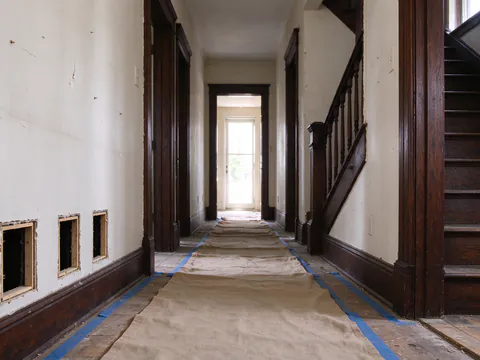
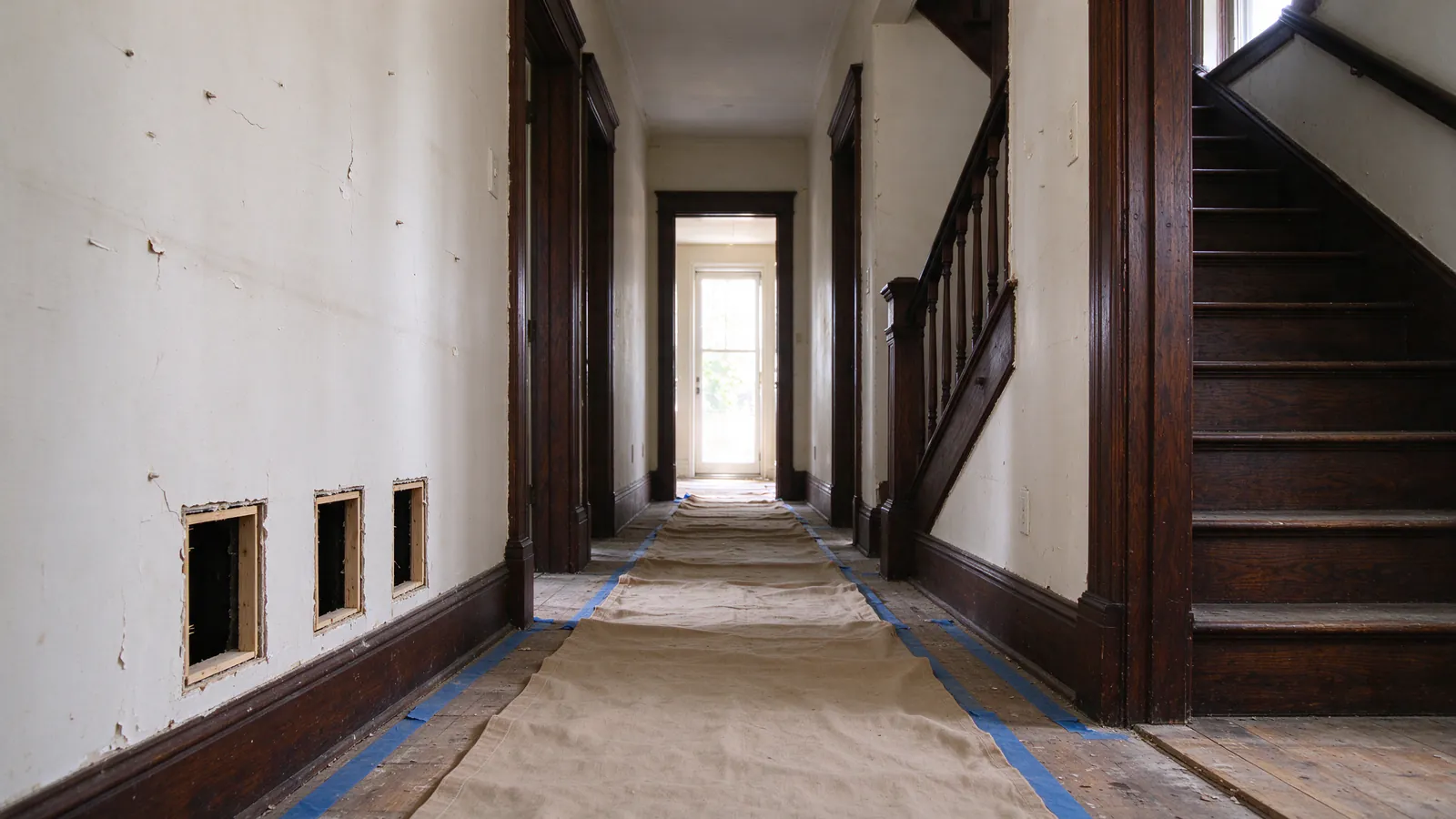
The first inspection that matters for a rewire is rough-in. Philadelphia requires applicable rough-in work to be inspected before it is concealed. For knob-and-tube replacement, that means new cable has been run and boxes set, but walls, ceilings and floors that were opened are still open. The inspector looks at cable types and routing, support, protection where cable passes near framing surfaces, box fill and grounding.
The City also offers an optional Rough-in Permit that allows cable to be installed before the full permit is issued. Its approval lasts 60 days, and work under it must not be concealed. It is useful when a project needs to start while the full application is still in process.
Fished cable that runs inside closed cavities cannot be seen along its length. What the inspector can see is the cable at each box, at entry points in the basement or attic, and at any access opening. How an agency handles concealed runs is something to ask the contractor about before work starts, especially if the plan relies heavily on fishing; the guide to replacing knob-and-tube without gutting walls explains the routing side.
The final inspection
The final inspection comes after receptacles, switches, fixtures and breakers are installed and the panel is labeled. The inspector checks device installation, protective devices such as AFCI and GFCI where required, panel connections and labeling, and that the installed work matches what the permit describes. An approved final closes out the electrical permit.
What Completion Records Can Establish
A closed permit with a passed final inspection establishes that the work described in the permit was inspected and met the applicable requirements at the time of inspection. That is valuable: it shows the work was done by a licensed contractor, under a permit, and checked by an independent inspector.
It does not establish that the whole house is safe, or that no knob-and-tube remains. A permit covers its stated scope. If the project replaced three circuits, the inspection covers those three; any original wiring outside the scope was not part of the inspection. Even within a scope that replaced all known live circuits, the records do not certify concealed conditions nobody could see.
This matters for insurers and buyers, who sometimes treat a closed permit as proof that a house is “free of knob-and-tube.” Pair the inspection records with the electrician’s written description of what was replaced, disconnected and removed, and of anything that remains. The guide to the knob-and-tube removal insurance letter covers what that description usually says.
What Happens if Corrections Are Required
An inspector who finds something that does not meet the code issues corrections rather than an approval. Common categories include a missing protection plate where cable passes near a framing surface, a box with too many conductors, a missing AFCI or GFCI where one is required, a loose connection, or labeling that does not match. Corrections are a normal part of inspection, not a sign the project failed.
The contractor makes the changes, and the agency reinspects the affected items. At rough-in, that means openings stay open longer, and patching waits until approval. At final, it may mean a brief return visit. The contract should say who pays for reinspection fees and correction work; it is reasonable to expect the contractor to correct its own work at its own cost.
Ask for a copy of any correction notice, not just a verbal summary, and keep it with the later approval. A record that shows an item was flagged and then fixed is more useful to a future buyer’s inspector than one that shows only the approval, because it answers the question of what was found and how it was resolved. If a correction involves something you chose, such as a fixture location or a device you supplied, expect to discuss the cost of changing it.
If the inspector finds a problem outside the scope, such as remaining knob-and-tube in an area not being rewired or a panel issue, it may be noted but not block approval of the permitted work. Ask the contractor to explain any such notes in writing, because they may matter for insurance or a sale.
How Inspection Fits the Project Schedule
Inspections are fixed points the rest of the project waits on. Rough-in approval has to come before patching, so a gap between the end of the electrical rough-in and the agency’s visit leaves openings in the plaster for that long. The final inspection comes after devices, breakers and labels are done, and it often lands before the last coats of patching and paint, which do not affect the electrical approval. When you compare contractors, ask how far ahead each one books its inspection agency and what happens to the schedule if a correction is needed. The knob-and-tube replacement timeline puts these steps in the context of the whole project.
On a larger project, such as a whole house rewired in phases, the inspection plan may involve more than one rough-in visit, one for each area as it is ready, so patching in finished areas can start while other areas are still being wired. Ask whether that is possible for your project and how it affects the agency’s fees.
Buildings with more than two units
The inspection model is the same for a two-to-four-unit building, but the permit path differs. Philadelphia routes one- and two-family permits to its Residential process and other buildings to Commercial, and buildings beyond a one- or two-family dwelling may need plans, especially where the occupancy changes. More units also mean more circuits to inspect and more coordination with residents for access on inspection days. The multi-unit knob-and-tube replacement page covers those projects.
What Owners Should Retain
Keep these together with your house records:
- The electrical permit number and the description of work on the permit.
- The inspection agency’s name and the results of the rough-in and final inspections, including any corrections and their resolution.
- The contractor’s written scope and change orders.
- The electrician’s description of the end state: which original circuits were replaced, disconnected and removed, and what remains.
- Invoices and the contractor’s license information.
- Photos of the work at rough-in, if you or the contractor took them, which show what is behind the patched walls.
The City maintains public permit records, which a buyer’s agent or insurer may check. Make sure what you hold matches what is recorded. If a separate Building Permit was required, keep its records too. When the time comes to sell, the guide to selling a house with knob-and-tube explains how buyers and their inspectors use these documents.
Next Steps
If you are planning a rewire, ask each contractor how the inspection agency is engaged, how rough-in timing affects patching, and which records you will receive. The guide to hiring a knob-and-tube electrician in Philadelphia covers how to verify licensing, and how knob-and-tube rewiring works describes the stages leading to final inspection. For the overall project, see whole-home knob-and-tube rewiring, and when you are ready, request an estimate.