
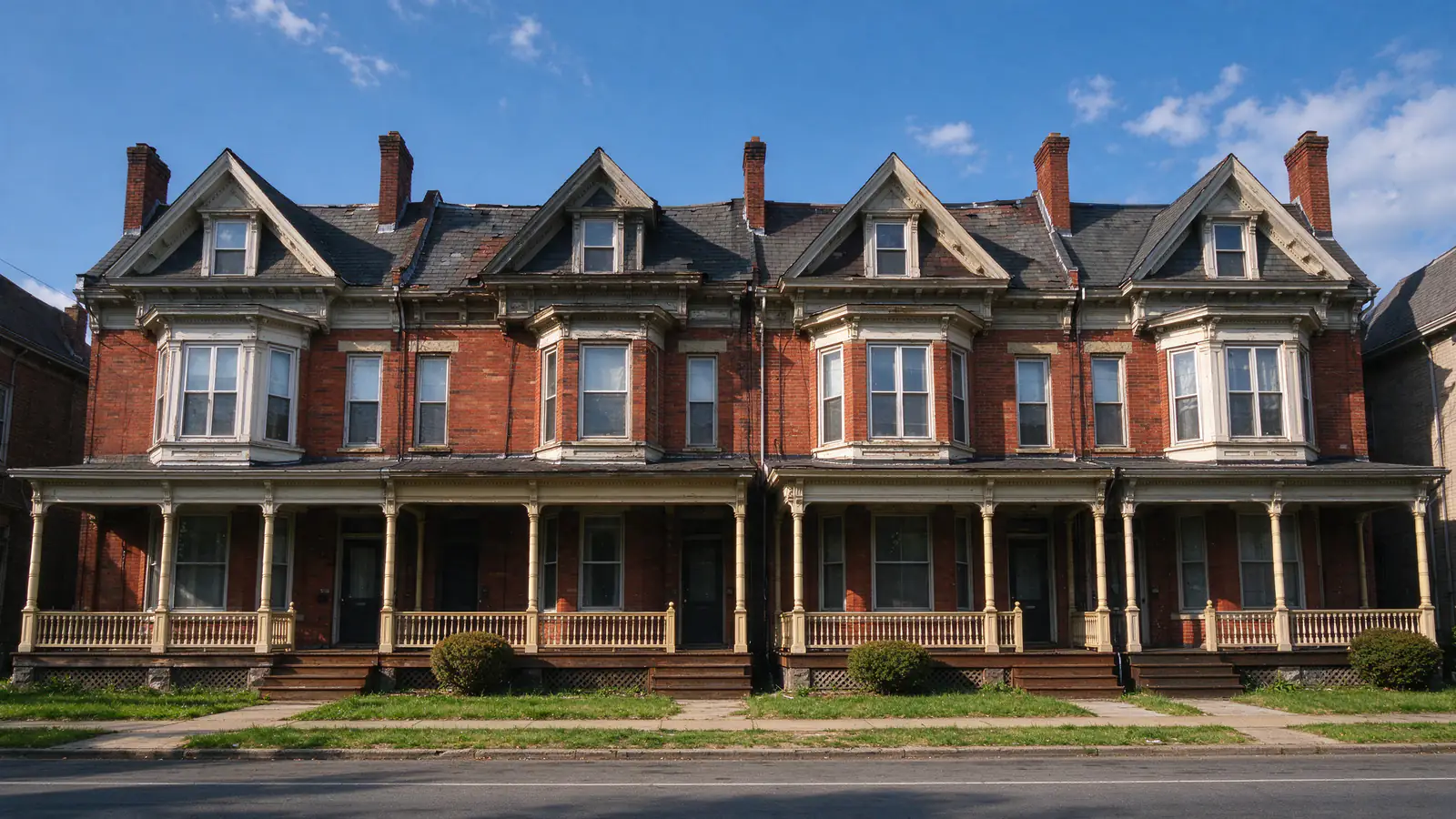
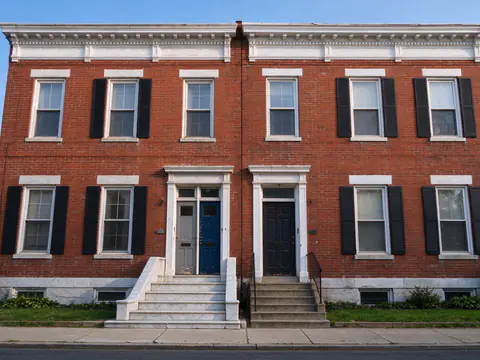
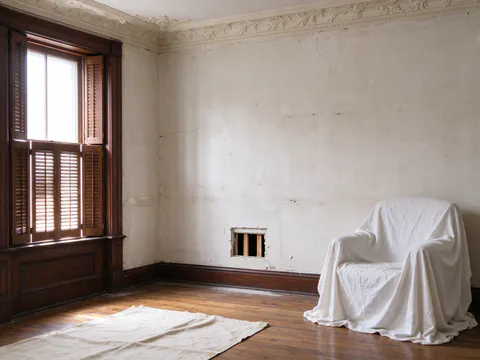
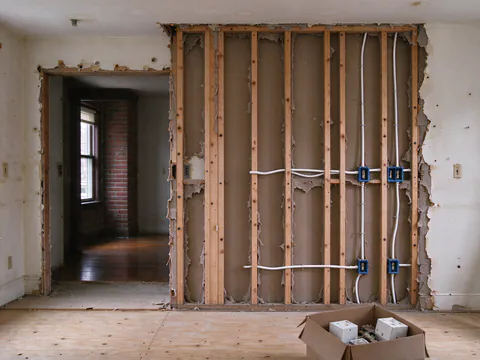
In much of Spruce Hill, a tall Victorian twin stopped being one household’s house decades ago, and the wiring often tells that story floor by floor. Owner-occupants and landlords of converted twins can bring that problem to Philly Knob & Tube, which manages knob-and-tube replacement in Spruce Hill through licensed, insured electrical contractors.
The decision here usually has two parts. Inside, how do you replace old wiring across apartments that are lived in, where a single circuit may still wander between units? Outside, does the house sit within the Southeast Spruce Hill local historic district, where moving meters or adding conduit on the facade needs Historical Commission approval?
How a Split Twin Ends Up With Two Wiring Histories
The City Planning Commission’s University and Southwest District Plan looked at conversions in 2012. It reported that the Office of Property Assessment had recorded 2,605 single-family-to-multifamily conversions across that planning district, most of them in University City, where 40% of all single-family structures had been converted to apartments. Three-story semi-detached houses were the form converted most often. The University City district is larger than Spruce Hill, but the memo discussed Spruce Hill by name, and the twin it describes is the typical house here.
A conversion leaves layers. The original house may have been wired with knob and tube when electricity first arrived. The conversion then added kitchens, bathrooms and often a separate panel for each unit. Some conversions ran entirely new wiring; others extended the original circuits and connected new apartments to them. Later renovations in individual units added more. The result can be an apartment with modern cable in the kitchen and old wiring still feeding its bedroom ceiling light, or a hallway fixture powered from someone else’s unit.
Census figures show how common small multi-unit buildings are in this part of the city. In ZIP code 19104, which contains the Spruce Hill core along with the university campuses and Powelton, 22.1% of housing units are in buildings with two to four units, against 14.4% citywide, and 44.6% of units were built in 1939 or earlier. Neither number says whether a given house still has knob and tube; they explain why so many Spruce Hill inquiries involve more than one household.
Separating Unit Circuits When Old Wiring Crosses Floors
A separate meter and panel for each apartment does not prove each unit’s wiring was separated. The useful question is where every circuit actually goes. An electrician maps which panel feeds each receptacle, switch and fixture, and flags any branch that serves more than one unit or a common area from a unit’s panel.
Old wiring adds one more complication. Knob-and-tube circuits and some early conversion wiring were sometimes arranged so that two circuits shared one neutral conductor. When those circuits end up on different units’ panels, turning off one apartment’s breakers does not make the shared conductor safe, and the neutral can carry current from the other unit. That is a reason to treat such circuits as one piece of work even if it means entering two apartments. The shared neutrals guide explains the mechanism, and the mixed wiring guide covers splices between old and new cable.
Once the map exists, the scope can be split cleanly. Unit circuits that stay within one apartment can be replaced one unit at a time. Circuits that cross units, and common loads such as the stair, hall, basement and exterior lights, form their own list. The two-to-four-unit service is built around that separation. If only a few circuits turn out to be live, a bounded job is possible; if the old system runs through every floor, a coordinated building-wide replacement usually wastes less effort.
Rewiring Occupied Apartments
Most converted twins are lived in when the wiring work happens. Each household needs notice of when its power will be off, which rooms will be opened and how long the openings stay open. A kitchen without power, a bathroom without lights or a home office without receptacles is a real problem for the people in that unit, so the schedule has to plan around them rather than around the electrician’s convenience.
A vacancy changes the economics. An empty apartment can be opened, rewired and patched in one continuous stretch, with no need to move furniture or protect belongings. Owners with units turning over at different times sometimes sequence the building around those openings, then handle the shared circuits and common areas at a point when every household has been told. That can work well, provided the circuit map comes first so that no unit’s phase leaves an old branch live behind a finished wall.
For the people staying in place, dust control, clear access paths and a predictable daily shutdown window matter most. The guide to living at home during rewiring covers those details, and they apply to each apartment as much as to a single-family house.
What a Three-Story Streetcar-Suburb Twin Hides in Its Walls
Spruce Hill lies inside the boundaries of the West Philadelphia Streetcar Suburb Historic District, listed on the National Register in 1998 with periods of significance running from 1850 to 1949 and Queen Anne, Colonial Revival and Classical Revival among its styles. That span covers the years before electric service was common, the decades when knob and tube was the standard method, and the arrival of later cable types.
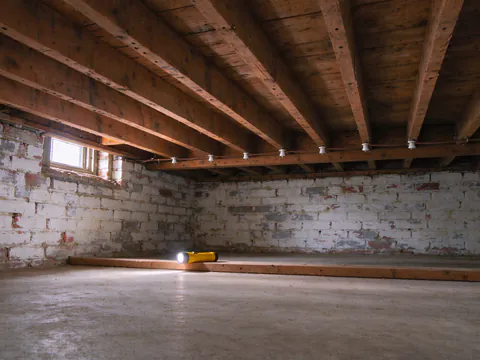
A house from that span can hold original plaster on wood lath, tall ceilings, deep trim and pocket-door partitions, along with walls opened and closed during conversions. In a twin, one side wall is shared with the other half, so routing usually runs through interior partitions, stacked closets, the basement and the top-floor ceiling. A three-story house also means a long vertical path: first-floor circuits can come from the basement and third-floor circuits from above, but the second floor has to be reached from one direction or the other. One Spruce Hill permit describes exactly that kind of job, a rewire of the second floor of a three-story twin.
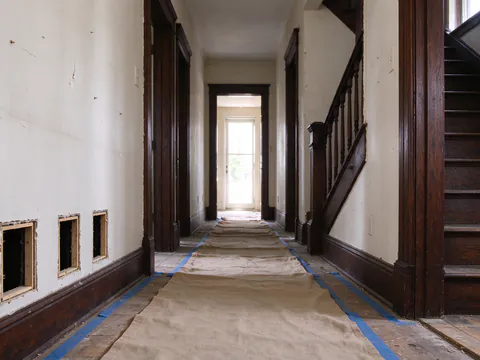
Where original plaster and trim survive, the access plan decides how much of it is touched. Fishing cable through existing cavities, small openings at the top and bottom of a wall and work from closets can reduce damage, but some openings are usually needed. The plaster wall rewiring service explains how openings and patching are planned, and the historic home service covers finish protection in older houses.
Inside or Outside the Southeast Spruce Hill District
In July 2024 the Philadelphia Historical Commission created the Southeast Spruce Hill Historic District, a local Philadelphia Register district of 572 mostly residential and commercial properties. It is roughly bounded by Spruce Street on the north, 39th Street on the east, Baltimore and Woodland Avenues on the south and 43rd Street on the west. 193 of those properties were already individually designated, and 94% are classed as significant or contributing.
Inside the district, owners need approval to change building exteriors. For a rewiring job, that means the parts that show: a relocated or added meter bank, a new service entrance, conduit or cable on a facade or roof, and exterior equipment. Interior rewiring is outside the Commission’s review unless the interior is designated, which is rare. A converted twin that needs a meter for each apartment is the case most likely to raise an exterior question, so it pays to settle the meter and service location early. If the job grows into service work, PECO’s own service and meter requirements apply as well.
West of 43rd Street or north of Spruce, a property is outside this local district unless it is individually designated. The National Register listing covers a much larger area, but listing alone does not trigger city review of private rewiring. The historic Philadelphia homes guide explains how the two kinds of designation differ.
What the Permit Record Shows in Spruce Hill
From 2007 to the present, 25 City of Philadelphia electrical permits within Spruce Hill mention knob and tube in their scope of work, out of 865 electrical permits in total. That is 28.9 per 1,000, against 5.8 citywide. Since 2021 the share is higher still: 15 of 258, or 58.1 per 1,000. The counts are small and undercount the real work, since many rewiring permits never name the old system. They do show that owners here are replacing it at well above the city’s average rate.
The permit path depends on the number of units. L&I’s EZ permit covers qualifying alterations to one- and two-family dwellings. A twin converted into three or four apartments is not a one-or-two-family dwelling, so its permit follows a different route. A licensed electrical contractor must perform the work in either case, and a licensed third-party inspection agency inspects rough-in and final work. The Philadelphia permit guide explains each step.
Turning a Converted Twin Back Into One House
Some Spruce Hill buyers purchase a twin that was split into apartments and plan to live in all of it. That project is the best opportunity to deal with old wiring, because it already involves removing extra kitchens, consolidating panels and opening walls. Circuits that once fed a third-floor kitchen will be retired or repurposed, and any knob and tube still in service can be replaced while the plaster is open rather than in a second disruption later.
The order of work matters. The circuit map should come before demolition, so the plan shows which old branches are live and where they run. Electrical rough-in then happens while walls and ceilings are open, and its inspection must pass before anything is closed up. Combining several unit panels into one is panel and service work, which can involve PECO when meters change, and it is priced separately from replacing the branch wiring. A new panel by itself does not remove any knob and tube; the panel upgrade comparison explains why. The renovation replacement service covers how electrical work fits around a larger remodel.
Getting Into Every Unit for the First Visit
For a converted building, preparation starts with a list: how many units, which panel and meter serves each, which are occupied, and any record of when the conversion and later renovations happened. The first visit then covers every unit, the basement, the stair and hall, and whatever attic access exists, because a circuit that starts in one apartment may end in another. Expect the visit to need access to every unit on the same day, which means arranging it with each household in advance.
The written scope that follows should list unit circuits by apartment, shared and common circuits separately, the expected openings in each unit, patching, and how notice and access will be handled. It should also state whether any exterior change is planned and, inside the district, how the Historical Commission approval fits the schedule.
Pricing Several Units Without a Published Band
For a single-family house, the Philadelphia-area planning range for a substantial whole-home replacement is $9,000 to $25,000. That is a budgeting range, not a quote from Philly Knob & Tube, and it covers replacing the active knob-and-tube branch circuits; plaster restoration, painting and panel or service work may be excluded. There is no separate Spruce Hill figure.
There is also no verified price band for multi-unit buildings, so a converted twin is priced from its drivers. The number of units and active legacy circuits, how many circuits cross unit lines, how many panels and meters are involved, whether units are occupied or vacant, the access path through three floors and the amount of plaster to restore all move the total. A building done unit by unit over several vacancies will usually cost more overall than one done in a single stretch, because setup, protection and inspections repeat. The Philadelphia cost guide lays out permit fees and other drivers.
A first step for any Spruce Hill owner is a circuit map that covers every unit and the common areas. Describe the building on the contact page, and see the about page for how the work is arranged. For nearby neighborhoods with different decisions, see Society Hill, South Philadelphia and the service areas list.