
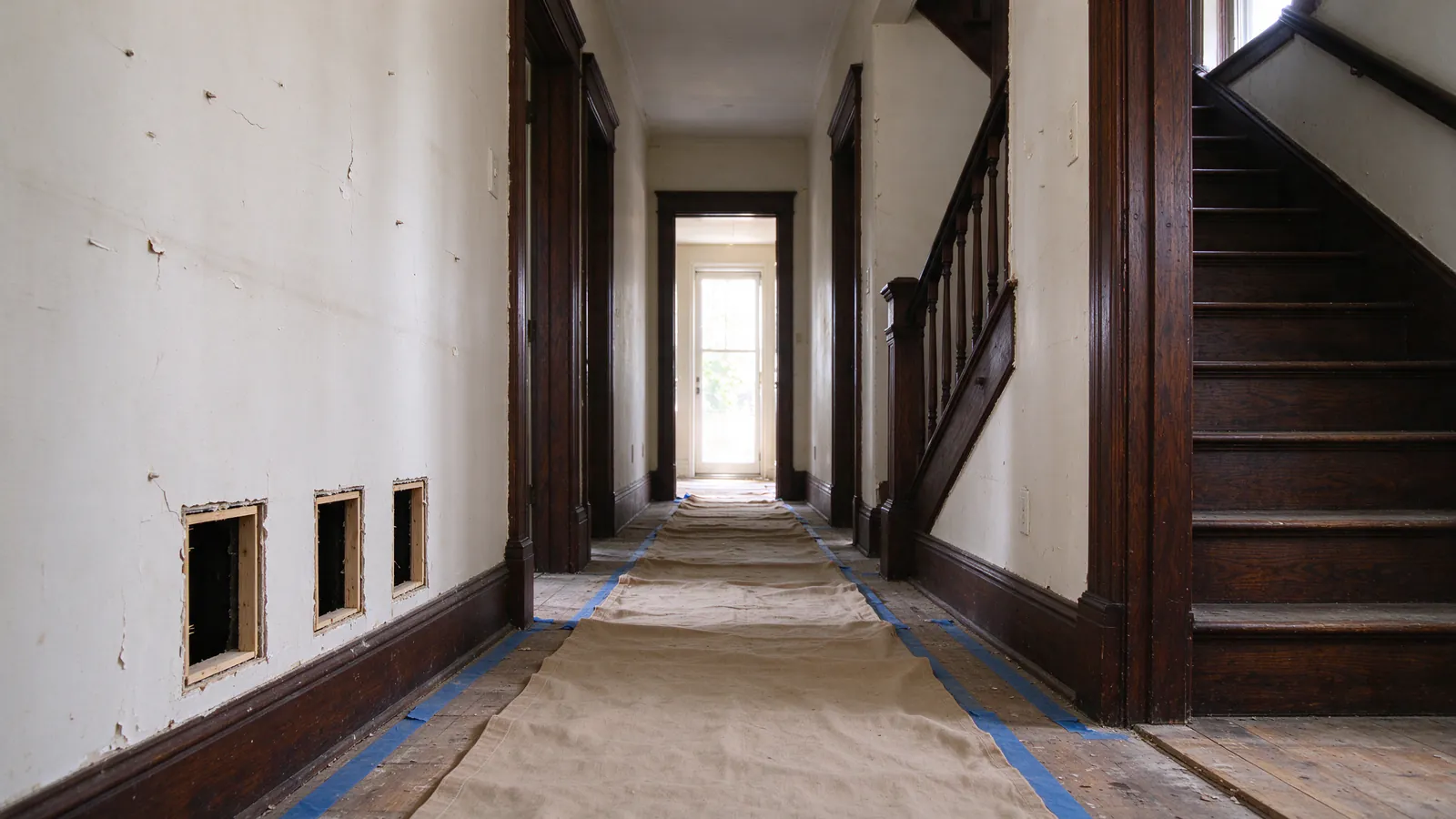
Organizing old house rewiring records for a home sale means keeping a small, specific set of papers together: the electrical permit number, the inspection agency’s reports, the contractor’s written scope, a circuit map and photographs of the new wiring before walls were closed. Filed in one place, they answer the wiring questions that come up at listing, inspection and insurance.
The Moments When Someone Asks
A sale follows a pattern, and wiring questions arrive at the same few points in almost every one. Knowing them tells you what each record is for.
The first is the listing. Sellers complete a disclosure form, and the listing agent will want to describe the electrical system accurately. “Rewired” is a claim, and the records are what back it up. The guide to selling a house with knob-and-tube covers how sellers handle the question when old wiring is still present.
The second is the buyer’s inspection, usually during an inspection contingency period set in the agreement of sale. A home inspector who sees porcelain knobs in a basement or attic will note them, whether or not they are live. A seller who can produce a final inspection report and a statement that the old runs were disconnected turns a vague note into a settled question within the contingency period instead of a renegotiation.
The third is the buyer’s insurance. A buyer with a mortgage generally needs homeowners insurance in place before settlement, and insurers ask about the electrical system. Homeowners report that disclosure of active knob-and-tube can slow or complicate that step. If the buyer’s insurer wants evidence that the old wiring is no longer active, the records you kept are that evidence. The guide to knob-and-tube insurance deadlines explains how insurers’ time limits interact with a sale, and the guide to the removal letter insurers ask for explains what that document should say.
What Records Are Worth Keeping
Not every piece of paper from a rewiring job helps. These are the ones that do, and why.
| Record | Why it matters later |
|---|---|
| Electrical permit number and the permit’s scope description | Lets anyone confirm through City records that the work was permitted and what it covered |
| Inspection agency’s rough-in and final reports | Shows a licensed third-party inspection agency checked the work before walls closed and at completion |
| Contractor’s written scope and final invoice | Names the circuits replaced, what was excluded and who did the work |
| Statement on remaining knob-and-tube | Says plainly whether any active knob-and-tube remains and, if so, where |
| Updated panel directory | Matches each breaker to the rooms it now serves |
| Insurer correspondence | Shows what the insurer asked for and what was sent in reply |
The permit number is the anchor. Philadelphia’s electrical permits are issued by L&I and recorded by address, so a buyer, lender or future electrician can look up the permit and its approved scope. In Philadelphia, inspections on permitted electrical work are done by a licensed third-party electrical inspection agency rather than by L&I, so the agency’s reports are a separate document from the permit, and both are worth keeping. The final inspection guide explains what the last report covers.
The statement on remaining knob-and-tube deserves extra attention after a partial knob-and-tube replacement. A house with some original circuits still in service is not a problem to hide; it is a condition to describe precisely. A list that names those circuits and their rooms protects the seller from the claim that the house was described as fully rewired.
Which Drawings and Photos Help Future Owners
A circuit map is the most useful drawing a house can have. It does not need to be an architect’s plan. A floor-by-floor sketch showing each room, its receptacles and lights, and the breaker that feeds them is enough. If the contractor produced one during the knob-and-tube inspection or the rewiring, ask for an updated copy at the end that reflects the finished work.
Photographs are the record that cannot be recreated later. Before walls and ceilings are closed, ask the contractor for photographs of new cable and boxes in the open cavities, or take them yourself from a safe distance with the contractor’s agreement. Label each with the room and wall. Photos of the disconnected old runs, and of the basement and attic after accessible dead runs were removed, are worth having too. A future owner planning a renovation will use them to see where cable runs before cutting into plaster, and a future buyer’s inspector can see what the finished walls hide.
Keep a few photographs of the panel as well: the panel with its cover on and the directory filled in. Do not remove panel covers to photograph the interior; the contractor’s records cover that.
How to Store Inspection and Scope Documents
A records system for one house can be simple, as long as it survives a move and a few years of nobody looking at it.
Keep a paper folder with the permit, the inspection reports, the scope and invoice, the remaining-wiring statement, the circuit map and printed photos. Label it with the address and the year of the work. Then make a digital copy: scan or photograph each paper document, name each file plainly by what it is, and keep the folder somewhere that is backed up. A single PDF that combines everything in the order of the table above is easy to send to a listing agent, a buyer’s attorney or an insurer.
Store the panel directory at the panel, where an electrician expects it, and keep a copy in the folder. If the house has several units, keep one set per unit plus one for the common-area circuits; the multi-unit replacement page describes the extra records small building owners need.
At settlement, hand the folder to the buyer. The records belong with the house, and the next owner will need them for their own insurer and their own renovation.
When the Records Are Incomplete
Plenty of sellers rewired years ago and kept only an invoice, or bought a house that a previous owner rewired and received nothing. The gaps can usually be narrowed, if not closed.
Start with the permit. The City keeps electrical permit records by address, including the type of permit and the approved scope of work, so a search of the property can recover a permit number and a description of what was approved, even when the paper copy is gone. If a permit turns up, the inspection agency named on it may be able to supply copies of its reports. The original contractor may still have the scope and any circuit drawings.
Some things cannot be recovered. Photos of open walls exist only if someone took them, and a vague invoice cannot be turned into a circuit-by-circuit description after the fact. Where the record is thin and a sale or insurance question depends on it, the practical substitute is a current assessment: a licensed electrician maps the circuits as they are today and states in writing whether any active knob-and-tube remains. That document does not prove what happened during the earlier job, but it answers the question buyers and insurers actually ask, which is what the house has now. The guide to buying a house with knob-and-tube shows how buyers read that kind of statement.
Starting Before the Work Is Done
The easiest time to organize these records is before the job starts. When you compare quotes, ask each contractor what documents they provide at the end, and whether that includes a circuit map, photographs and a written statement on remaining knob-and-tube. The guide to comparing rewiring quotes lists the lines to look for, and the resources page has a printable checklist.
Philly Knob & Tube arranges whole-home knob-and-tube rewiring and partial replacement in Philadelphia through licensed electrical contractors, and the documentation is part of the scope worth agreeing on up front. If a sale is on the horizon, request an estimate and mention the timing.